In Land of Himalayan Happiness, Political Prisoners Spend Decades In Decrepit Jails
This story and image were produced and published by Asia Democracy Chronicles.
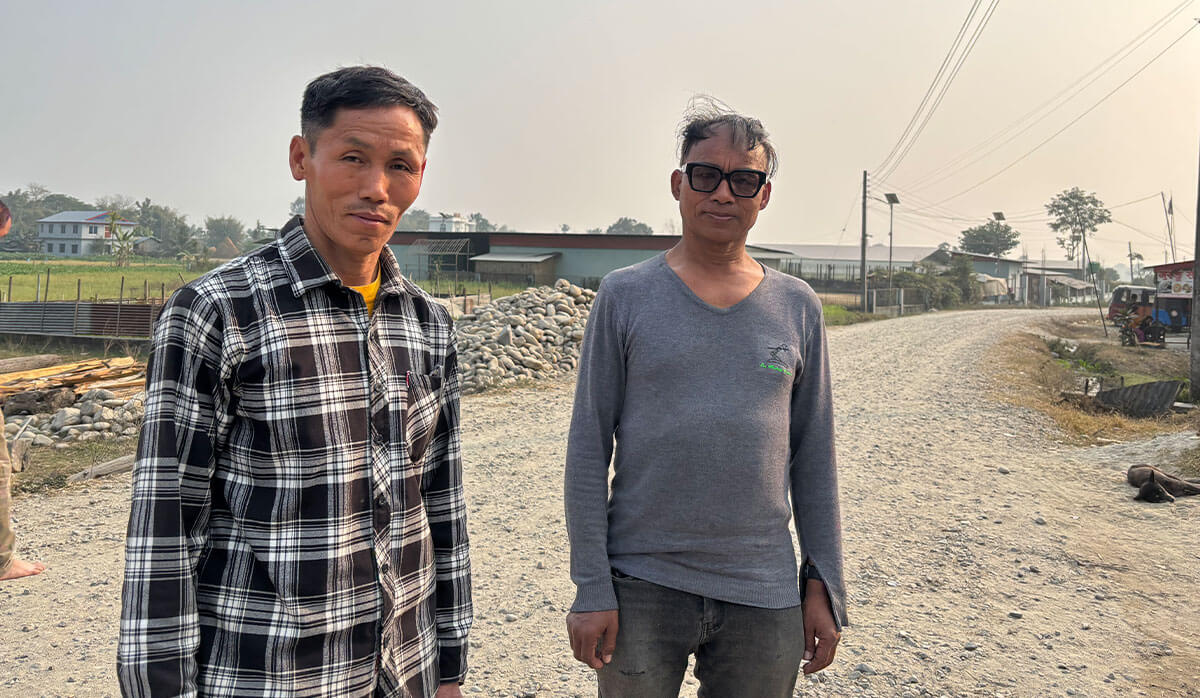
In a tea shop at Bange Bazaar, just outside Beldangi refugee camp in eastern Nepal, two former political prisoners sit under the warm February sun.
Madhukar Mangar, 60, and Man Bahadur Rai, 53, spent decades behind bars in Bhutan for allegedly joining pro-democracy protests there in the early 1990s. Mangar endured 29 years in Chamgang Central Prison; Rai, 22. Released years ago, both men bear scars, not all of them physical.
This afternoon, their conversation turns to Sha Bahadur Gurung, another political prisoner, but who never walked free.
“It is extremely sad,” Rai says. “The authorities who run those jails should be held responsible. The initial torture in police custody was so harsh and inhuman. Years in poor conditions, no medical check-ups – it can break even the toughest man.”
Gurung died in custody last Dec. 15 at age 65. By then he had already spent 35 years behind bars. He was serving a life sentence for participating in peaceful protests in southern Bhutan. A former Royal Bhutan soldier, he was jailed at the Rabuna military prison, notorious for its brutal regime. In early December, as his eye condition worsened, Gurung was transferred to Chamgang Central Prison near Thimphu and promised better treatment. He arrived there around Dec. 10. Five days later, he was dead.
“He was Lhotshampa like us,” says Mangar, shaking his head. “I heard about him from other inmates. Since we were in different facilities, I never got a chance to meet him. But it is shocking and painful to hear of his mysterious custodial death. Bhutan will never investigate or tell the world the real cause.”
The Lhotshampa are Nepali-speaking Bhutanese who live mainly in southern Bhutan – hence their nickname “southern borderlanders” in Dzongkha, Bhutan’s national language. Although they are ethnic Nepali, the Lhotshampa have lived in Bhutan for generations.
But then Bhutan introduced the Citizenship Act in 1985, which demanded proof of residency before 1958, among other strict criteria. This essentially stripped thousands of Bhutanese, particularly many Lhotshampa, of their citizenship, while reclassifying long-term residents as illegal immigrants.
By the late 1980s and early 1990s, Bhutan was heavily promoting its “One Nation, One People” policy, forcing minorities to assimilate and practise Drukpa culture. The Nepali language was dropped as a language of instruction in schools.
Many Lhotshampa fought back, mostly through peaceful protests, but a violent crackdown had thousands of them fleeing Bhutan. Thousands more were forcibly pushed out of the country, with most ending up in refugee camps in Nepal.
According to most estimates, more than 100,000 Lhotshampa have been forced out of Bhutan, with the majority eventually finding new homes in Western nations through a U.N. resettlement program. Around 6,000 remain in camps in Nepal, while some 40,000 stateless Lhotshampa are believed to still be living in Bhutan, including some of Gurung’s relatives.
Gurung’s four siblings, meanwhile, are scattered across the United States. None of them is willing to talk about the brother who died alone in a Bhutanese jail. Even in exile, families guard their silence to protect those still inside.
Peaceful dissent criminalized
Ram Karki, a Bhutanese human rights activist based in The Hague, says that Gurung’s relatives in Chirang district received his body and performed the last rites in their village according to tradition.
Himself a Lhotshampa, Karki has long been advocating for the rights of the Bhutanese, especially political prisoners. He says that little information has emerged regarding Gurung’s death.
“Families inside Bhutan rarely speak out,” he tells Asia Democracy Chronicles (ADC). “Fear runs deep. Issues like this touch national security and the king’s authority. Speaking against it can bring more punishment, even life sentences. Also, the media inside Bhutan stays away from such issues.”
According to Karki, however, Gurung’s relatives outside Bhutan told him that the former soldier appeared in good health shortly after his transfer to Chamgang Central Prison in December.
One of Gurung’s former neighbors, now resettled in the United States, recalls that at the time of his arrest, Gurung was just in his 30s and unmarried.
“He was on leave (from the army) in September 1990 when peaceful demonstrations against injustice spread across southern Bhutan,” says the former neighbor. “When he returned to duty, he was accused of joining the protests and sentenced to life imprisonment.”
“I’m not sure if he ever had a lawyer or a fair trial,” the ex-neighbor continues. “His immediate family members, whether in Bhutan or living abroad, will never speak about how he was treated in prison or what his health was like in his final days.”
At the height of the protests, individuals like Gurung were typically charged with treason under the 1992 National Security Act, their crime often framed as “sympathies for the Lhotshampa people” or “participation in subversive activities.”
Because he was then an active member of the Royal Bhutan Army, Gurung’s alleged involvement in the demonstrations was deemed a severe anti-national breach, punishable by life imprisonment without parole. Similar cases among other Lhotshampa protesters involved terrorism-related offenses under the Penal Code, such as conspiring against the state, extortion, or kidnapping tied to protest claims; though sedition was rarely explicit, the vague laws effectively criminalized peaceful dissent.
These statutes provide a sentencing range for first-degree felonies: a minimum of 15 years up to life, the most severe punishment in Bhutan, which abolished the death penalty in 2004. Sentence differences – like Gurung’s life term versus Mangar’s nearly three decades – arise from perceived roles and specifics: soldiers face harsher treatment for “betraying” military duty, while civilians often receive fixed terms for “anti-government activities” or lesser-included offenses.
A life term means detention until death under Bhutan’s Penal Code and sentencing guidelines, unless their sentences are commuted by royal pardon, amnesty, or clemency from the King. Historical examples include the former king’s amnesty to 40 political prisoners (some serving life) in 1999 and the current king’s pardon of six (including one imprisoned for life) in 2022.
Dismal prison conditions
In 2023, Human Rights Watch (HRW) said that Bhutan had at least 37 political prisoners, which Bhutanese law defines as those “convicted for conspiring, attempting, soliciting, abetting or committing offenses against the Tsa-Wa-Sum (King, country, and people).” Of these, said the global rights monitor, 32 were Lhotshampa.
Last December, Nepali Times reported 31 Lhotshampa were still in prison. The list included Gurung as it was prepared days before his death.
All of the Lhotshampa political prisoners in jail are now elderly; seven are former soldiers like Gurung. Opinions adopted by the U.N. Working Group on Arbitrary Detention in November 2024 highlighted arbitrary detention and enforced disappearance in cases involving political prisoners in Bhutan, as well as the accused having no access to legal counsel.
Meanwhile, Madhukar Mangar says that in the decades he spent at Chamgang Prison, he witnessed cramped, unhygienic cells where basic dignity was hard to maintain.
“There was no water to bathe properly,” he recalls. “The cells were overcrowded and filthy. The food quality was very poor, and many inmates fell sick. When you got sick, there were no doctors to treat you. You just had to survive on your own.”
Chamgang Prison is frequently highlighted in international reports regarding human rights, particularly concerning the detention of political prisoners and overcrowding. Its designated capacity is 400; as of 2025, the facility holds around 653 inmates.
Rabuna, where Gurung spent most of his sentence, is described by one former inmate as “the point of no return.” It holds former soldiers and officials accused of treason, including Lhotshampa political prisoners. Being transferred to Chamgang was supposed to be beneficial to Gurung, but he ended up dying there.
There is no indication that the Bhutanese government has opened an inquiry regarding Gurung’s passing; neither has it disclosed any details about how he died.
HRW says Thimpu is secretive on political prisoners, often refusing to discuss or account for such cases and attributing deaths to natural causes without scrutiny. The rights watchdog calls Gurung’s death a tragic reminder of the injustice and needless suffering endured by alleged government critics in Bhutan’s grim prisons.
Nirajan Thapaliya of Amnesty Nepal says that Gurung’s custodial death is a “serious violation” of universal human-rights standards, citing decades of abuse, sustained neglect of Gurung’s health, and delayed medical response after he was found unconscious in his cell. International rights groups like Thapaliya’s and HRW have been calling for an independent investigation on his death, as well as transparency on the treatment of political prisoners in Bhutan.
ADC requested comments from the Bhutan Prime Minister’s Office regarding Sha Bahadur Gurung’s passing and prison conditions in Bhutan; it has yet to receive a reply. In a July 2025 interview with The Bhutanese, though, the Chamgang police senior superintendent said that while the prison continues to face pressure from increasing inmate numbers, measures are in place to support inmate reformation and relieve congestion through a carefully regulated Open Air Prison and skills-development initiatives.
Dying in silence
On a sunny Nepalese afternoon, Man Bahadur Rai’s voice softens as he recalls another friend who never made it out of Chamgang Central Prison.
Aitha Tamang, also known as Aithey Tamang in some accounts, died there in 2014 while serving a 43-year sentence for alleged involvement in the pro-democracy protests of the 1990s.
He and Tamang were close, Rai says. In the mornings, after meals, they would talk and share stories before returning to their separate cells. But then one morning came the news: Tamang had passed away overnight.
“He was my good friend,” says Rai. “A simple man who endured long, inhuman torture in those first days of police custody.”
He says that Tamang’s health got somewhat better after the brutal early years, but damage was already done. Rai believes Tamang suffered a cardiac arrest, the result of neglect, with no regular medical check-ups over decades in that harsh place.
At least Gurung’s death got some attention outside, says Rai, lamenting that Tamang’s passing went completely unreported. Some observers fear there may have been more Tamangs, citing the poor jail conditions’ visible toll on the remaining political prisoners. Talk in exile communities also suggest additional suspicious deaths in the 1990s-2000s, attributed to initial torture during arrests, but these lack confirmation.
For Mangar and Rai, life after prison remains difficult – and lonely. Both live by themselves in the camp, their respective wives and children resettled years ago in foreign countries. They get by with odd jobs in the area or help from family abroad.
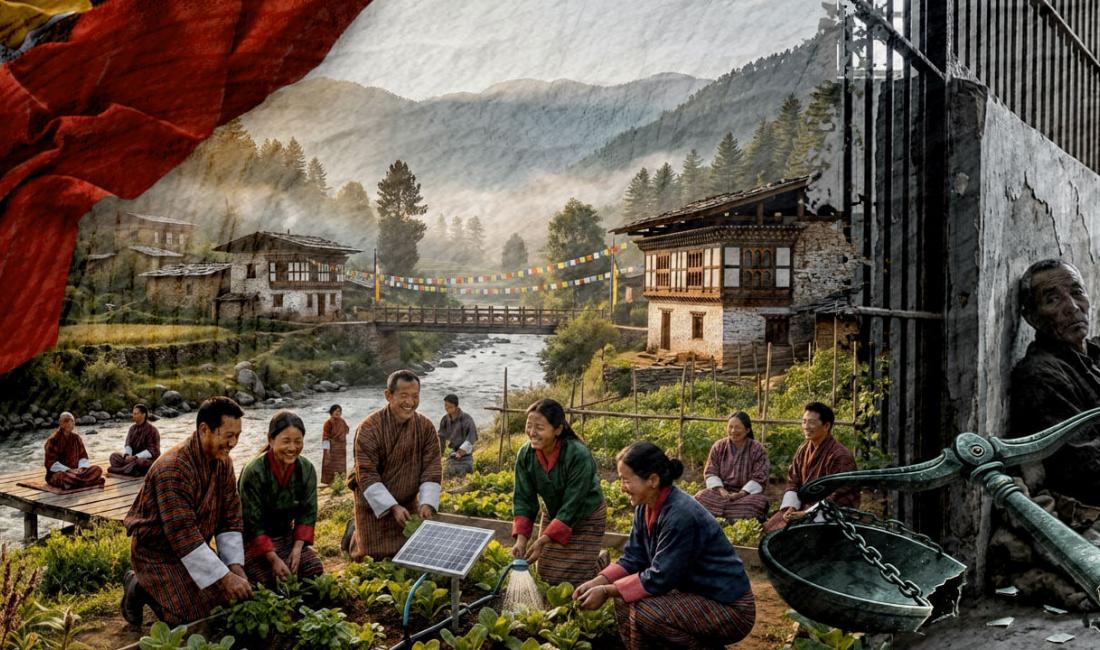
Yet when both men speak, there is no anger, only quiet resolve. They know the story is not over. Sha Bahadur Gurung’s death reminds them, and the world, of unfinished justice. Decades ago, thousands asked only for fairness and equal rights. Bhutan proudly promotes Gross National Happiness. These voices from exile ask: why can’t they be part of that?