The Contest to Become Southeast Asia's Top Center Burdens Locals in Power Prices and Emissions
This piece was co-published and produced by Asia Democracy Chronicles and the Philippine Center for Investigative Journalism
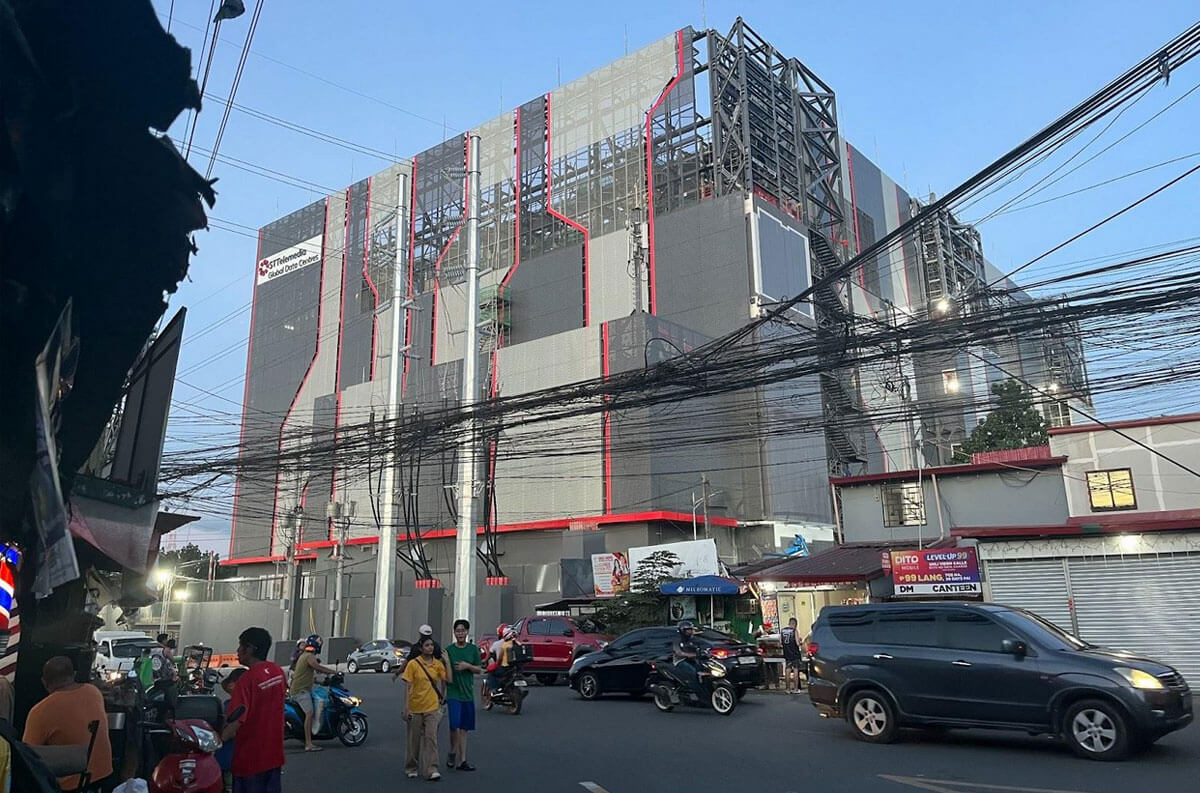
In a low-income community of Fairview, a suburb of Philippine capital Manila, a large rectangular structure is rising near a busy highway clogged with vehicles, commuters, and commerce. Few passersby realize that this building is one of four data centers that will be built in Fairview. Together, they will draw up to 124 megawatts (MW) of electricity that will be used to power tens of thousands of data servers. That’s enough energy to electrify all five of the country’s poorest provinces.
The Fairview data center campus is a joint venture between Globe Telecom, one of the largest telecommunications companies in the country, Singapore-owned ST Telemedia, and Ayala Corporation, a Filipino-owned investment conglomerate. The joint venture already operates two other data centers in Manila, one in nearby Cavite province, and another in the southern city of Davao in Mindanao, the second-largest island in the Philippine archipelago.
The data center business is booming in the Philippines, which has over 90 million internet users who are online an average of nearly nine hours a day. The country’s thriving outsourcing sector, which accounts for nearly 10 percent of GDP, depends heavily on digital infrastructure.
Since 2022, companies have been rushing to build data centers to power internet use and drive the country’s digital and AI transformation. The Fairview campus and others like it will service “hyperscalers”—large technology firms that provide cloud computing services like Amazon Web Services and the Chinese company Tencent. These hyperscalers are expanding their Philippine operations, capitalizing on undersea cables that transmit data across the Pacific. The data center campuses will also host co-location services for companies that need to rent data storage facilities.
Regulators, however, are still figuring out what this surge in power demand would mean for an energy-insecure country with an energy-burdened population and a weak regulatory regime. While the data centers are fueling the growth of the country’s booming IT and business processing sectors, they are also extracting a high environmental and social cost.
So far, there are at least 40 operational and planned data centers, mostly in Metro Manila, the capital, and its outskirts. Vitro, the largest player in the local data center market, is opening up 11 facilities to clients like Microsoft, Amazon Web Services, and Google.
To continue reading, visit Asia Democracy Chronicles.