Asia Democracy Network Finds 'Democracies' Suppress Dissent, Erode Accountability, Consolidate Elite Power
This essay was produced and published by Asia Democracy Chronicles.
Asian democracies are entering an era where institutions look functional on paper but fall short of delivering meaningful accountability, equity, and representation.
That is the central finding emerging from a year’s worth of monitoring by the Asia Democracy Network (ADN) and its members, who tracked autocratic trends across the region through consultations, expert discussions, and the recently released 2024 Democratic Overview covering the sectors represented by ADN members.
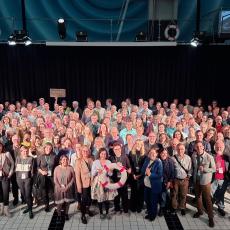
The report, along with deliberations held in the lead-up to the 2025 Asia Democracy Assembly in Bangkok, paints a picture of political systems increasingly adept at projecting democratic legitimacy while suppressing dissent and consolidating elite control.
Captured institutions
Across Asia, public fatigue is rising — not from “too much freedom” — but from democratic institutions that remain captured by political dynasties, military establishments, and deeply entrenched ruling parties.
These institutions are failing to deliver, and worse, only benefit a few.
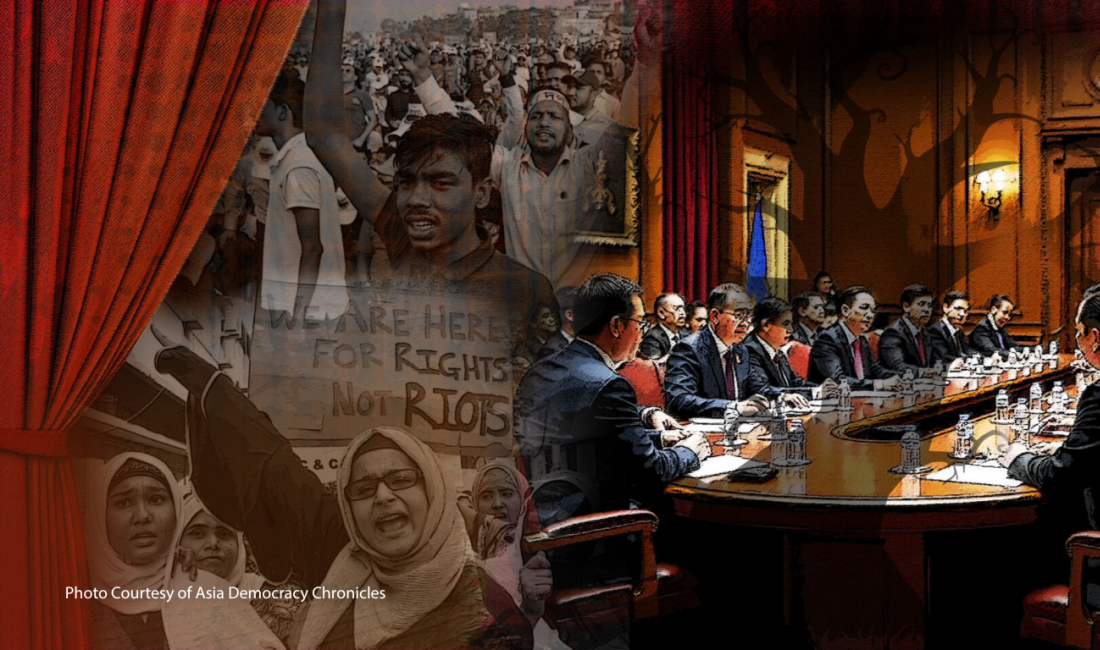
Unsurprisingly, the generational dissatisfaction stoked by this reality has sparked protests in Sri Lanka, Bangladesh, Nepal, Indonesia, the Philippines, Timor-Leste, and Mongolia, led by the internet natives – or the Gen Z – who generally are experiencing great economic distress and helplessness over a crisis of representation.
International data reinforces this trend.
The V-Dem institute’s 2025 Democracy Report reveals that “autocratization” in Asia has rolled back to 1987 levels.
Today, 89 percent of the population in Asia-Pacific is under autocratic regimes, while in South and Central Asia, only 3 percent of the population lives in democratic spaces.
At the core of this crisis is the repression of freedom of expression and deliberative processes. The governance structures in Asia, dominated by the military, dynastic, and one-party leadership, tend to repress opposition and pluralism, and centralizes power and resources in the hands of a few.
As a result, the policies crafted by these governance structures are not necessarily in the public interest, triggering public dissatisfaction, which power wielders also try to repress through various means.
Yet, the familiar trappings of democracy are still firmly in place: elections are still happening, parliaments are crafting laws, there is some space for citizen participation and expression, the internet is alive, and governments are speaking the language of equality and liberty at every turn.
‘Performative democracy’
This contradiction is what ADN describes as “performative democracy”:
a system that stages the appearance of public participation to meet global expectations while avoiding genuine accountability or structural change.
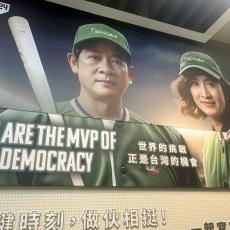
This concept is inspired by the cultural phenomenon of “performative males” — a Gen-Z term used to describe men who curate an image or aesthetic that makes them appear sensitive and progressive (eschewing traditional hypermasculine traits, especially online), without necessarily embodying these values. Performative males are often seen drinking matcha, sporting a tote bag, and carrying a book.
Performative democracy is no different. It is not merely an imperfect democracy, but a consciously designed façade or illusion of progress and freedom. Under this model, elections leave elite power intact, public input processes have no real influence, and policies invoke equity without delivering it.
The spectacle is intentional: it preserves existing power structures while projecting compliance with global democratic standards.
Faulty electoral systems
Aside from severe economic disparities, there are other drivers of performative democracies in Asia that hinder reform.
For one, elections in Asia tend to be uncompetitive, with repression of opposition parties as in the case of Cambodia, and the dominance of single parties in Singapore, China, Vietnam, Laos, and North Korea. Other parts of the region, such as Indonesia, Pakistan, Sri Lanka, and the Philippines, have seen the emergence of dynastic politics.
For another, elections are tokenistic processes meant to legitimize overt control by powerful interests, disregarding the results when they lose, as in the case of Thailand (which dissolved winning opposition parties three times), and the disregard by Myanmar’s Tatmadaw of the 2021 elections.
In an extreme case, Afghanistan has fully abolished elections, marking the political exclusion of civilians from government affairs and placing women in a much more precarious situation.
Other elections are confronted by problems such as issues of sectoral, gender, and youth representation, campaign finance regulations, poor political party development and discipline, unfair electoral administration, and the lack of meaningful legal reforms that can disrupt the structures of injustice.
Such challenges constrain the diversity of ideas in governance structures, cultivating disinterest, exclusion, and political apathy among citizens. This translates to governments that are apathetic to people’s priorities and needs.
Information ecosystems have become another battleground. Governments and political actors increasingly rely on warped narratives, social media manipulation, and populist messaging to consolidate power.
For instance, President Prabowo Subianto of Indonesia – who is accused of committing human rights abuses during the Suharto regime – successfully reinvented himself as a benign, grandfatherly figure. In South Korea, Yoon Suk-yeol rode on an anti-feminist public sentiment as he set his sights on presidential victory. In the Philippines, both the Duterte and Marcos election campaigns capitalized on widespread disinformation and historical revisionism.
Meanwhile, the institutions which could have helped counter disinformation have been weakened. In Hong Kong, school curricula, teacher recruitment, and university courses are made to fit Beijing propaganda, while purges of critical books and scholars have been happening.
In Kazakhstan, media institutions are the targets of Distributed Denial-of-Service (or DDoS) attacks, while interference in independent newsrooms and the work of journalists are not uncommon.
In Sri Lanka, monopoly over the ownership of media companies with ties to political parties has been negatively impacting pluralism and creating bias. In Japan, exclusionary politics and hate speech tactics are often directed at vulnerable sectors, especially migrant workers. This contributed to the rise of the right-wing Sanseito Party, which eventually won 14 seats in the last elections.
Much can be said about the responsibilities of social media companies as a medium for disseminating disinformation, which becomes more complicated with the advent of AI-driven disinformation. This compromises citizens’ freedom of thought, expression, decision-making, and free information.
Securization, draconian laws
Asian states have been so adept at limiting civic space and dissent under the guise of security. “Othering” – the portrayal of minorities as threats – has fueled majoritarian politics in countries like India, where Hindu nationalists have been “othering” Dalits, ethnic, and religious minorities to appeal to a broad section of the country’s fragmented population.
Securitized laws are also being weaponized to quash dissent – running the gamut from Malaysia’s Security Offences (Special Measures) Act that targets activists to the proliferation of anti-terrorism laws passed in other parts of the region.
Such securitized approaches to governance have accorded undue power to agents of security and public order, giving them justification for the use of surveillance, the politicization of the military (exercising far more control over civilian affairs), and the militarization of police forces (accentuated by a war-like thinking: “there is an enemy among the people”).
There is also an unmistakable rise in legal repression. Across Southeast Asia, governments have leaned heavily on cybercrime, sedition, NGO regulation, and anti-insurgency laws to stifle dissent. Thailand’s lese-majeste laws, for instance, have been used aggressively against youth activists.
This places further pressure on justice mechanisms that are already riddled with issues of independence. For instance, in Pakistan, the 26th Constitutional Amendment (passed October 2024) introduced sweeping changes to the composition of the Judicial Commission tasked with the mandate of appointing judges. A majority of the Commission will be composed of appointees by the executive and legislative bodies. Such composition politicizes the appointment of judges to the country’s Supreme and High Courts.
A similar situation was observed in the Maldives, with the recent interventions to alter the composition of the bench. In the Philippines, public distrust in the judicial system has forced activists to seek recourse against former President Duterte in the International Criminal Court, where he awaits his formal trial for crimes against humanity for his war on drugs.
Taken together, these forces create democracies that function more as stagecraft than systems of shared governance. In such a setting, performative democracy isn’t merely inadequate; it functions precisely as intended. It imitates reform while safeguarding systems that keep power and resources unequal.
Its endurance isn’t due to citizens being unaware, but to institutions being convincingly democratic in form while avoiding real redistribution. This political theatre endures because it appeases donors, reassures voters, and protects elite interests. But transforming equity from a slogan into lived policy requires abandoning this script entirely.