''The World Cannot Come Between Us'
Yes, Democracy Local’s "Mayor of the Year" is a 35-year-old, South Asian rapper-turned-mayor with deep support among the young and a talent for stoking controversy.
And no, New Yorkers, the inaugural winner of this prize—going to the mayor who did the most to advance democratic self-government locally and on this planet—is not Zohran Mamdani.
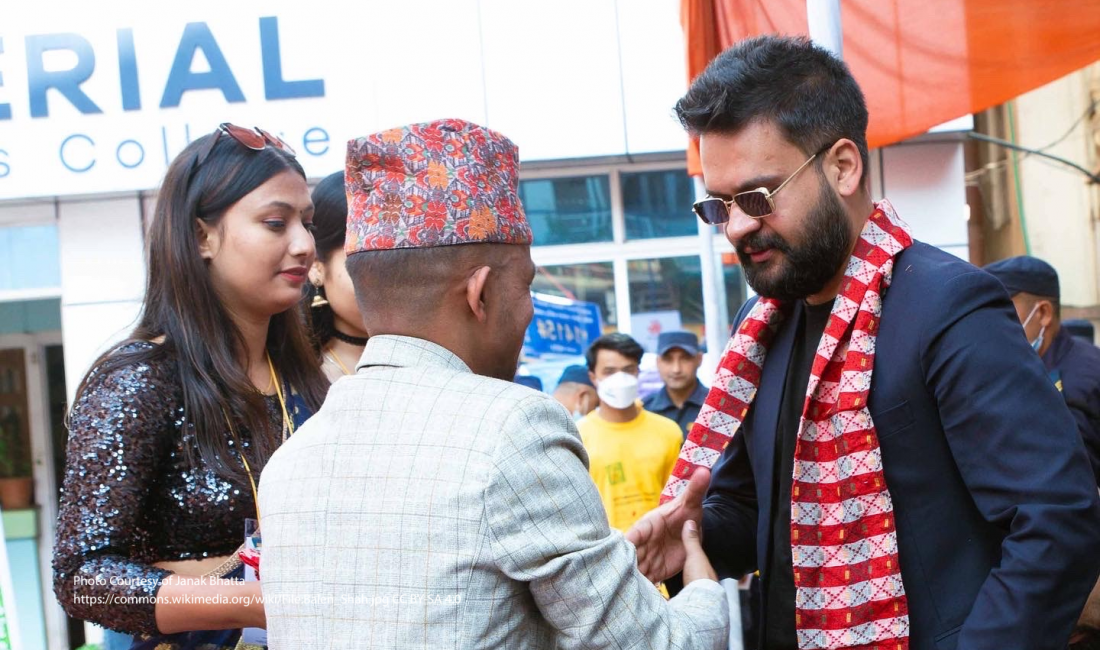
Congratulations to Balen Shah, mayor of Kathmandu, Nepal.
Mayor Shah, a political independent with two engineering degrees, demonstrated real courage and solidarity when he was one of the few elected political figures to support the Generation Z movement that overthrew the Nepalese government. The support of Kathmandu’s local government proved crucial to that victory, and the words of the youth movement borrowed from Shah’s own songs:
Will laws bind me just for raising my voice anew? In the song of sacrifice, my words salute the fight. Rise youth from every village. Grip your pens tight.
The Gen Z revolution in Nepal has become a worldwide one, with young people taking to the streets with “One Piece” flags in hand to take on corrupt governments in Madagascar, Serbia, Peru, Paraguay, the Philippines, and Indonesia. Mayor Shah’s support reframed this revolution not merely as a generational challenge but as an uprising by local communities tired of the political games and corruption of national governments.
When the national government cracked down on youth and announced a ban on unregistered social media platforms, Mayor Shah wrote a satirical poem and posted it on Facebook:
We’ll meet only in dreams
If roads are blocked.
Stepping out from home,
let’s stay one at heart.
Even amidst arrogance,
Just remember me, I’ll come at night.
The world cannot come between us.
I’ll hold your hand.
When the anti-government protests turned violent, and 19 people died, Mayor Shah attacked the prime minister and the government as “terrorists.” When the prime minister resigned, the mayor emerged as the country’s leading mediator in creating an interim government and restraining the youth against reprisals.
Mayor Shah’s strong record of local governance goes beyond supporting youth revolutions. His greatest contribution has come in transparency. His very first act was streaming municipal council meetings, allowing anyone with an internet connection to see his government at work. He’s also put government announcements and even data on social media—and he fought the national government’s bans on social media channels during the revolution.
The mayor’s policies have focused on empowering the “tole,” or neighborhood level of decision-making, thus building democracy from the ground up. He has localized the “smart city” concept, labeling his efforts the “Smart Tole” campaign and relying on Tole Lane Committees (TLCs) in which residents and neighborhoods manage their own lighting, waste, and greenery, and are rewarded when they do well. He’s allocated specific budgets to wards and encouraged communities to stop waiting for City Hall to act.
And he’s been perhaps the world’s most fierce advocate of local autonomy since the Barcelona mayoralty of Ada Colau. He’s challenged federal and provincial authority over local matters—including waste, police, and management of riverbanks—a policy he calls “true federalism.”
But he has also drawn righteous criticism, including a letter of concern from Amnesty International’s Nepal chapter, for evictions of squatters, bulldozing irregular housing, and not doing more consultation with stakeholders on sidewalk and river projects. His crackdown on street vendors drew a “199-hour protest” from activists demanding he extend his desire for local planning to include the city’s informal workforce.
Mayor Shah’s ability to connect local governance and cultural expression distinguishes him. Unlike Mamdani, who, as an artist, was very much an amateur, the mayor—or Balen, as he’s known in the hip-hop world—is very much a pro.
Many of his songs are about Kathmandu, corruption, and specific projects that he’s had to deal with as mayor. (Examples: “In the bazaar, roads with 20 potholes” or “Where will the train run? No path has been laid / Artists in jail / while fools fail to see the trade.”)
His signature rap, Balidan (“Sacrifice”), which predates his mayoral term, takes on the problematic Melamchi water project, which was supposed to supply water to Kathmandu and which he has fought to improve as mayor:
Pure water’s promised, arriving on a bicycle frame Melamchi’s sold for free—who’s left to claim? It’s all business, no politics, no royal grace remains.
The song’s chorus is a call to focus on the poor:
We made the cow sacred but no butter, no cheese. The poor, like Chameli, have no one to hear their plea. No one speaks for the poor, no one, not one, not me.
Mayor Shah is often discussed for national leadership, but Democracy Local hopes that Mayor Shah continues his revolution in local governance and does better by the poor.
Listen to Balen Shah's "Balidan"