A Court Precedent Defending LA Police Abuses Now Defends Federal Raids on Its People
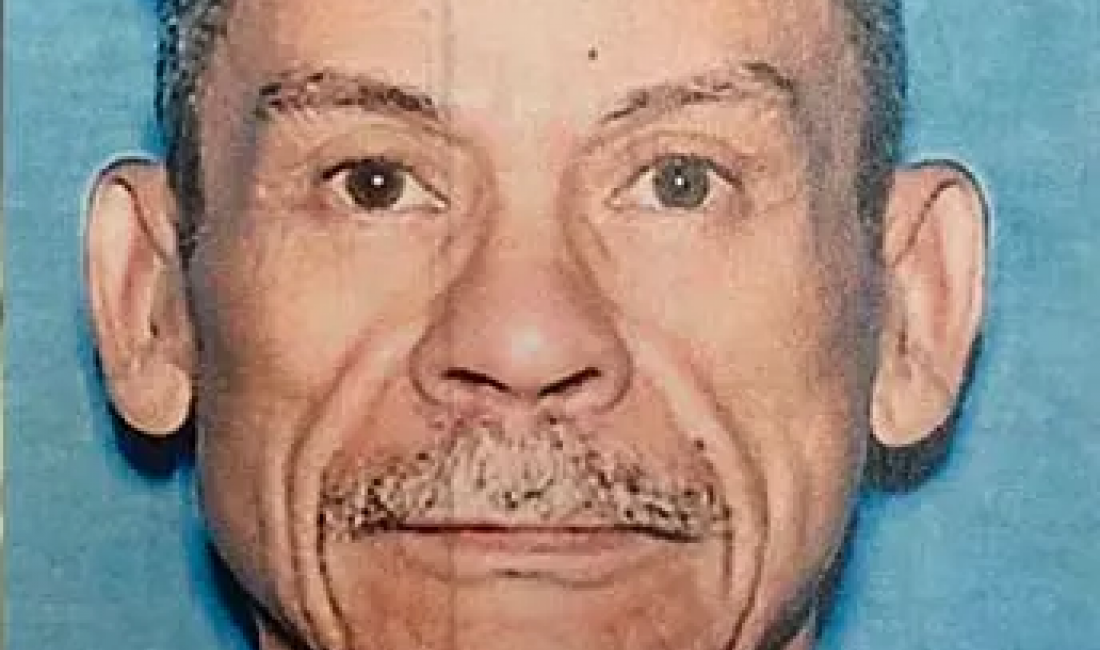
This column is co-published with Zócalo Public Square. Photo was released by the Los Angeles Police Department in 2022.
At 2 a.m. on October 6, 1976, LAPD pulled over Adolph Lyons, a 24-year-old Black driver, for a burnt-out taillight. Four white officers, guns drawn, ordered him to spread his legs and put his hands on his head.
Lyons, unarmed, did not resist. Nevertheless, an officer put him in a chokehold so tight Lyons lost consciousness. He woke up on the ground, his underwear soiled, spitting blood and dirt. The police gave him a traffic ticket and let him go.
But that wasn’t the end of the story. To the contrary, a half-century later, Los Angeles and California remain trapped in that very same chokehold.
Infuriatingly, the U.S. government is now using the unprovoked police violence against Adolph Lyons as legal justification for attacks by federal agents on those of us who look like immigrants, or dare to defend our immigrant neighbors.
In this rationale lies a stinging irony. The city of Los Angeles, by defending the officers’ violence against Lyons in the U.S. Supreme Court decades ago, made it nearly impossible for anyone to challenge unconstitutional federal assaults on Angelenos today.
Put another way: We Californians, by permitting and protecting police abuse, have brought the current federal campaign of rights violations on ourselves.
Here is the ugly story.
After the October 1976 encounter, Lyons, a military veteran, refused to let the matter drop—finding a lawyer and investigating what had happened. He soon realized how lucky he was to be alive. The LAPD used chokeholds often, causing frequent injuries and sometimes worse. In an eight-year period during which they brutalized Lyons, Los Angeles police killed at least 16 people using chokeholds; 12 of those 16 victims were Black men, according to court filings.
Lyons sued the city of L.A. in 1977, seeking not just compensation for his injuries but also to prevent such abuse from ever happening again. Specifically, his lawsuit asked for an injunction against LAPD chokehold use;
“except in situations where the proposed victim of [the chokehold] reasonably appears to be threatening the immediate use of deadly force.”
Lyons won in lower courts. But the city government appealed to the U.S. Supreme Court, claiming that the motorist wasn’t entitled to an injunction that limited police action.
The high court agreed, in a 5-4 decision, that dismissed Lyons’ lawsuit with Kafkaesque logic. The Supreme Court said that it did not matter that Lyons or others had been choked and, as a result, injured or killed. No person could get an injunction against police abuse, the court ruled, unless they could show a “realistic threat” that they, personally, were likely to be choked again in the future.
“Even assuming that Lyons would again be stopped for a traffic or other violation in the reasonably near future,” Justice Byron White wrote in the majority opinion in 1983, “it is untenable to assert, and the complaint made no such allegation, that strangleholds are applied by the Los Angeles police to every citizen who is stopped or arrested regardless of the conduct of the person stopped.”
In dissent, Justice Thurgood Marshall predicted that this precedent would protect police agencies from legal accountability for repeated constitutional violations, like violent chokeholds or racial profiling.
“Since no one can show that he will be choked in the future, no one—not even a person who, like Lyons, has almost been choked to death—has standing to challenge the continuation of the policy,” Marshall wrote.
Marshall’s concern proved correct. Since 1983, law enforcement agencies have routinely invoked the City of Los Angeles v. Lyons precedent to defend themselves against accusations of systematic rights abuses.
Including the Trump administration, in defending the violence of its deportation campaign. Just this summer, after U.S. District Judge Maame Ewusi-Mensah Frimpong blocked federal immigration raids in Southern California, the U.S. Department of Homeland Security appealed to the U.S. Supreme Court, which swiftly stepped in and reversed the order in a “shadow docket” decision.
Explaining the court’s reasoning, Justice Brett Kavanaugh relied explicitly on the Lyons precedent:
“Like in Lyons, plaintiffs here allege that they were the subjects of unlawful law enforcement actions in the past,” Kavanaugh wrote. “And like in Lyons, plaintiffs seek a forward-looking injunction to enjoin law enforcement from stopping them without reasonable suspicion in the future. But like in Lyons, plaintiffs have no good basis to believe that law enforcement will unlawfully stop them in the future.”
Kavanaugh used Lyons to greenlight profiling—targeting people based on Latino identity, speaking Spanish, or working in certain places—and to justify the federal raids.
With the legal system unwilling to stop abusive federal action, more radical local measures should be on the table—including closing current police departments and building new law enforcement agencies that, in their charters, are specifically authorized to fight federal and police abuses.
It’s also long past time for the city of Los Angeles to repudiate its Pyrrhic legal victory—and apologize to Adolph Lyons and all those being harmed in his name.
Recently I sought out Lyons at his last known address in Inglewood. He wasn’t there. Neighbors informed me that he was struck and killed by a speeding car in January 2022, as he walked in a crosswalk at Van Ness and Manchester Avenues. He was 70.
Lyons’ neighbors didn’t know about his role in legal history, but they knew him as a friendly and handy man who helped people in trouble. One volunteered that, if Lyons were still alive, he would be shielding the people now being targeted in the federal raids.