As Nations Trample Rights, Cities Enshrine New Ones
Do you feel like you don’t have any rights anymore?
Me, too. Around the world, nations are ignoring, trampling, and canceling the human rights enshrined in their constitutions. And people who fight back, demanding their rights in the streets, often end up injured, imprisoned, or dead.
Which is why you and I should head to our city halls, and enshrine all our rights in our local charters and constitutions.
This isn’t a new idea. In the 21st century, cities have been increasingly asserting their residents’ [SR1] local rights, and adding bills of rights to their governing documents.
The trend is more than just a reaction to national authoritarianism. It’s a reaction to the world’s non-stop urbanization—and to the failure of nations to recognize it.
Today, nearly 60% of humans live in urban areas—a figure that is expected to grow to 70% by 2050 and 90% in 2080. But national constitutions and world governance structures, mostly designed when most people lived in rural places, don’t recognize or include cities.
To use the United States as an example: From the New York-area’s Tristate Region to Chicagoland and Greater Los Angeles, the United States is now a country of urban metro regions—our job markets, sports teams, voting patterns, and transit systems are all regional. But the 18th century U.S. Constitution makes no mention of any city. Nor do its amendments. This silence excludes these places from the regime of checks and balances and rights upon which the country’s democracy is built.
“Those cities that are home to the majority of humanity, that are ubiquitous and crucial to every aspect of 21st century society, culture, economics and politics, do not exist constitutionally,” writes University of Toronto law professor Ran Hirschl in City, State: Constitutionalism and the Mega-City.
Tyrants routinely exploit this constitutional void to justify their attacks on big cities, which have independent economic and political power that can threaten dictators’ dominance. Examples include Erdogan’s imprisonment of the highly effective mayor and city administration in Istanbul, Orban’s crackdowns on civil society and the popular mayor in Budapest, and Trump’s deployment of masked federal officers to L.A., Minneapolis, and other U.S. metros to demonstrate his claim of “absolute authority” over cities governed by his political opposition.
In response to such attacks, cities have been filling the void with expansive new charters that assert their sovereignty, and the rights of their people.
This urban constitution surge started with a 2000 conference near Paris that produced the European Charter for Safeguarding Human Rights in the City.
That document, declaring the city “collective space belonging to all its inhabitants,” inspired urban regions to draft new local charters that delineated urban rights and outlined urban responsibilities.
In 2012, the Human Rights Charter of Gwangju, South Korea became Asia’s first such city constitution, establishing rights to freedom of thought, happiness, and labor. In 2014, after a 12-year-long process, Montreal produced its “Charter of Rights and Responsibilities,” which contains 42 articles (including both a right to not live in poverty and a responsibility to keep the city clean) and created an ombudsman position to monitor compliance.
“Each and every citizen of Montreal has the duty to act in a manner that does not infringe on the rights of others,” the charter reads.
The framework of these charters is the “Right to the City,” a French concept enshrined in the 2011 “Charter-Agenda for Human Rights in the City” from the United Cities and Local Governments (UCLG), the world’s largest municipal organization
“The right to the city” holds that all city inhabitants, regardless of national origins or legal status, are full citizens, and have equal rights, equal power to participate in public decision-making, and equal access to the services and spaces of the city.
The reasons for all these rights are not abstract. By embracing local rights, cities inspire public demand for the new services, better technology and improved guarantee that make those rights real, and improve residents’ lives.
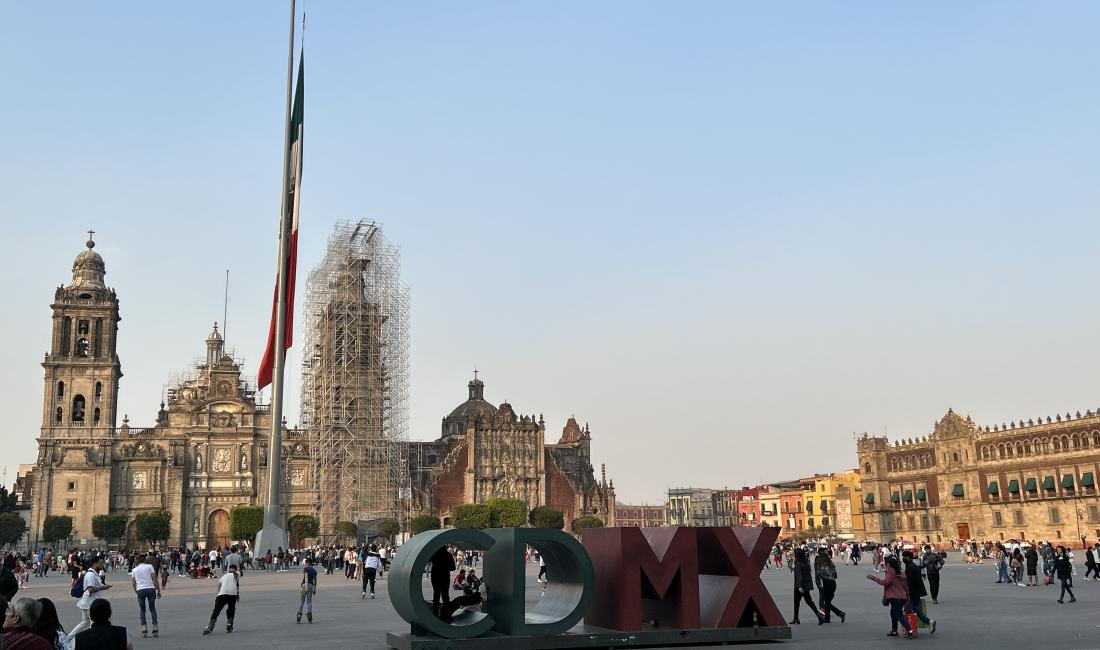
To see this kind of policymaking in action, go to Mexico City, which adopted the world’s most ambitious local constitution in 2017, when it became a city-state, with greater autonomy from national government control.
Mexico City’s constitution lists more than 100 rights, including the world’s strongest protection of the “rights of animals…as sentient beings,” and my personal favorite, that “the safety of persons who practice journalism shall be guaranteed.”
There are also rights to self-determination and the free development of a personality; a dignified life and a dignified death; physical and psychological integrity; sexuality; good public administration; privacy and protection of personal data; science and technological innovation; food, nutrition, health, housing, water, sanitation; entrepreneurship, mobility, and free time. Groups of people are guaranteed rights, including children, adolescents; migrants, “people in street situations,” Afro-Descendant persons, and indigenous persons.
Mexico City has justified dozens of new agencies, programs, and buildings to realize these rights. The city’s Institute of Democratic and Prospective Planning checks progress in defending all these rights through surveys, measures, and participatory consultations. Mexico City residents can invoke a “right of comprehensive reparation” to secure compensation when violations occur.
Back home in Los Angeles, where I’m a volunteer organizer of lottery-selected assemblies considering revisions to the city charter, I’m encountering hunger for more rights firsthand.
On January 11, one such assembly of everyday people recommended that L.A. add several rights to its charter. Among these were “a right to transparent, accountable and responsive government informed by equitable community input” and a “right to a basic standard of living” in housing, transportation, healthcare, and child care.
This being Hollywood, the assembly also supported “the right of Los Angeles residents to control how their likeness, personal data, and creative works are used commercially.”
Why stop at defending the national rights you’re supposed to have already? If you focus on your hometown’s local constitution, novel rights might soon be yours, too.