A Small Town's Powerful Youth Council Turns 10—And Opens a $28 Million Center
This column is co-published with Zócalo Public Square. Photos by Joe Mathews
The best city council in California just turned 10 years old.
Let’s hope it never grows up.
Because that city council is the Gonzales Youth Council, a body of small-town teenagers with a record of getting things done that big-city governments would envy.
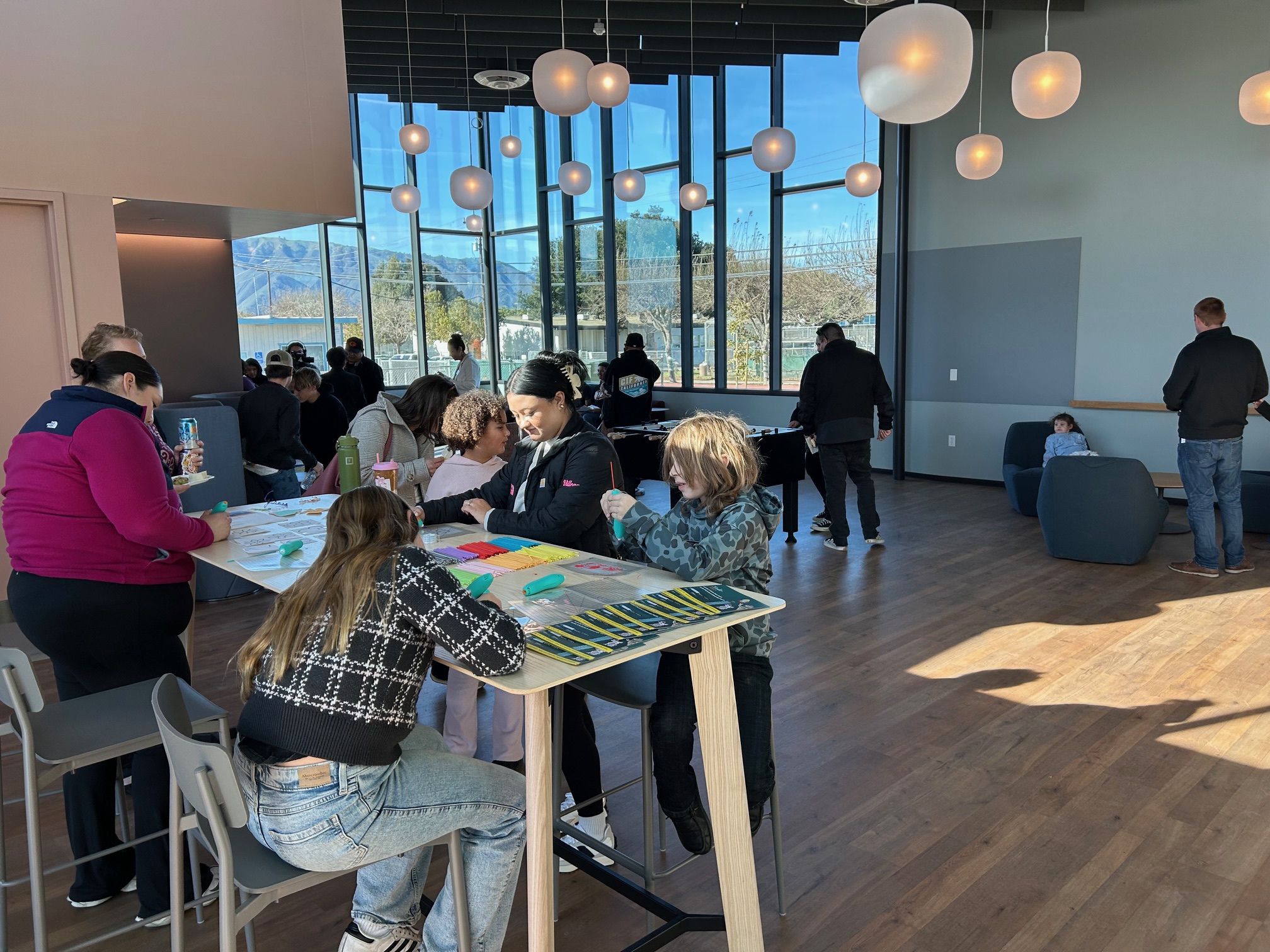
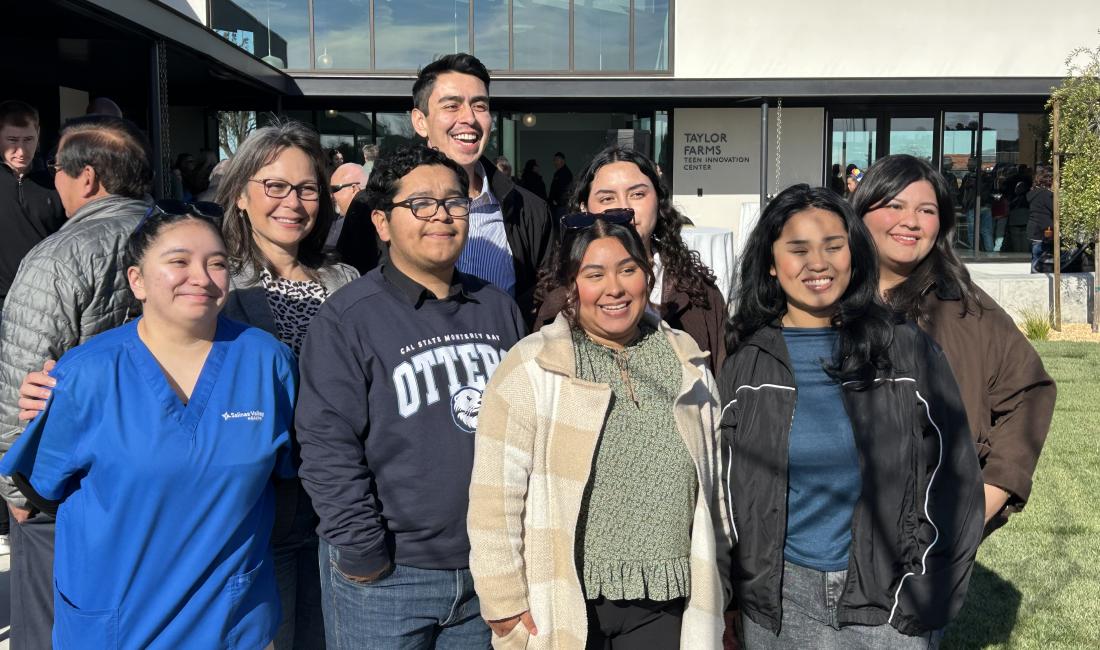
In recent weeks, the council opened the crowning achievement of its inaugural decade: the first community center ever in Gonzales, a rural city of less than 9,000 people and two square miles in the Salinas Valley.
The $28 million center is the biggest public project in city history. It is anchored by an institution first imagined by the youth council in 2015: the Teen Youth Innovation Center, which includes a recreation and maker space (named for Taylor Farms, the city’s largest employer). The center, on a large lot between the city’s middle and high schools, also boasts a new Monterey County library branch, an outdoor courtyard and amphitheater, and a classroom for homework and tutoring.
That members of the youth council, mostly Gonzales High students, proposed, conceived, designed and helped raise millions for the project might seem extraordinary. Except the extraordinary is par for the course in Gonzales, which may be the best governed place in California.
“Just because we come from a small town doesn’t mean we can’t do big things,” said Jeffrey Alvarez, a commissioner of the first youth council, who returned to Gonzales for the center’s opening.
Youth ouncilmembers past and present marveled at how many institutions rallied behind their vision. The city devoted millions from a voter-approved sales tax. Dozens of local families and businesses, mostly in food and agricultural technology, made significant donations.
State Sen. Anna Caballero found $5 million in the state budget, a rare bit of largesse for a rural community. City and Congressional staff secured federal grants and a $9.8 million loan from the U.S. Department of Agriculture. “It’s amazing what happens when everyone pulls together—and that’s what Gonzales is all about,” said U.S. Rep. Zoe Lofgren.
“This project really took a village to build,” city manager Carmen Gil said at the opening. “And it was the vision and advocacy of the youth council that generated support for the project.”
That support goes back to 2005, when Rene Mendez became city manager. He eventually asked the city council to make drawings of what was most important in Gonzales. Everyone drew pictures of kids—a natural reaction in a community where nearly 40% of residents were under 18. The city responded by developing youth services and starting the Gonzales Youth 21st Century Success Initiative.
A 2013 youth summit suggested the city add two “youth commissioners” to the city council. The first two youth commissioners used their seats to lobby for their very own council, which launched in late 2015.
The youth council consists of two or three commissioners, chosen by the city and given leadership training and paid summer internships. The commissioners then choose councilmembers, who are almost always high school age (though there are occasionally middle schoolers). Adults, including consultant Michelle Slade and various city officials,a a offer guidance, but the council makes its own decisions.
Crucially, city officials empowered the youth council to do more than organize holiday celebrations or workshops for young people. They urged the youth representatives to participate directly in decision-making, and to wade into tough issues.
So, they did. In the early years, the youth council took charge of a city survey of police-community relations, with the teenagers going door-to-door after immigrant residents didn’t respond to the original survey by mail. The council continued canvassing the public on sensitive issues; a 2023-24 tenant survey put local landlords on the defensive.
The youth council spent much of its first two years studying underage drinking, and discovered that adults often hosted the parties where kids got alcohol. Despite facing social pressure (“We were seen as not cool, as party poopers,” recalls Cindy Aguilar, one of the first council members, who now advises the body), the council wrote a “social hosting” policy that became a city ordinance. Youth council members, determined not to punish low-income families, replaced a heavy fine on parents who served alcohol to minors with a mandate that those parents take an educational course.
From that start, the youth council led a campaign to eliminate plastics, including plastic straws—two years before California banned them. The council also inserted itself into a divisive debate over whether to permit cannabis businesses in the city, offering two competing proposals to the adult city council and encouraging a middle path that Gonzales eventually adopted.
In 2019 and through the pandemic, the youth council tackled perhaps its most ambitious and sensitive project: Writing a youth mental health policy for Gonzales. The eventual proposal, based on 374 confidential surveys, convinced the school district to hire a clinically licensed social worker. A report about the effort got published in a scientific journal. The mental health policy, and the youth council’s other work, was also cited by the National Civic League in naming Gonzales (along with Dallas and Charlotte) an “All-American City” in 2023.
The youth council did all this work without an office of its own, much less a youth center. Former members of the council recall writing parts of the mental health program at McDonald’s, or compiling surveys at Starbucks, because both had tables and Wi-Fi. Years of accomplishments gave the youth council the motivation—and community credibility—to pull off the new center.
“The best thing about living here is the power of the community,” Shelby Anderson, a Gonzales High senior and youth commissioner, told me as she inspected construction last fall. “Even though it’s only 8,000 people, it feels like 80,000.”
The youth council’s impact also drew attention nearby. Two small cities to the south of Gonzales—Soledad and Greenfield—have established their own youth councils. Twenty minutes north, the larger city of Salinas started a youth council last year, after former Gonzales city manager Rene Mendez took the city manager job there.
The neighboring youth councils stay in touch with each other, and there is talk of starting a regional youth council that would make the Salinas Valley, already the world’s salad bowl, its youth democracy capital as well.
While many cities try to do youth engagement, said Mendez in a recently compiled history of the youth council, “the difference in Gonzales is that it was sustained. It was not a one-off… It outlived city councils, mayors, city managers. It just became part of what you do in Gonzales. It is not going to be eliminated now.”
The lesson for other places, Mendez added, is “if you can capture the essence of the youth in your community, the sky’s the limit. I can’t wait to see it in another 10 years.”