Gavin Newsom's Record May Be Too Long to Follow
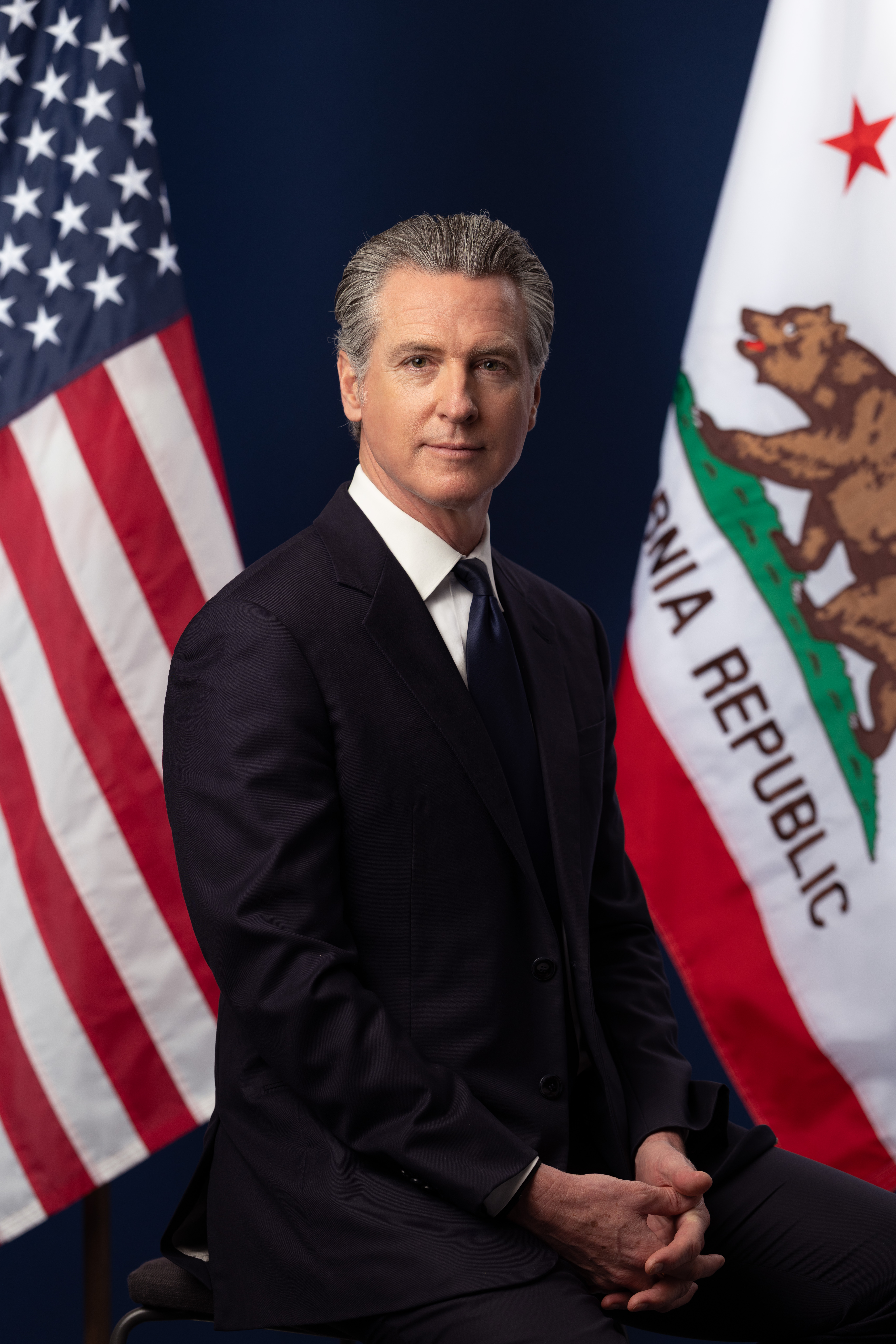
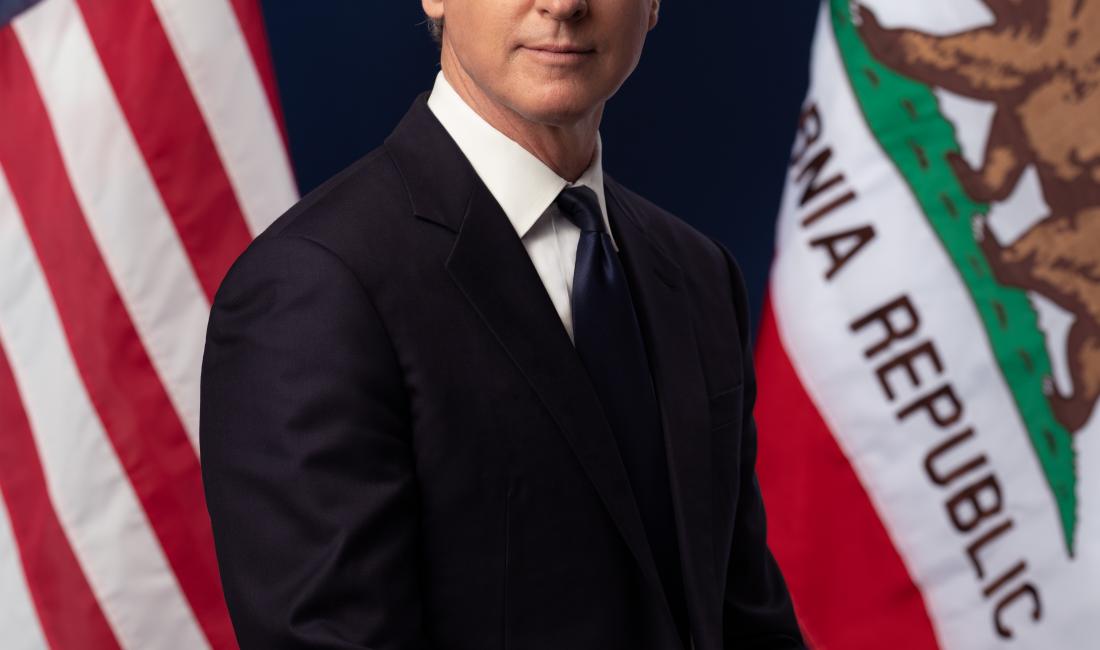
This story is co-publsihed with Zocalo Public Square. Photo is official portrait, via state of California
Can a politician be too accomplished?
The question isn’t a riddle, or a set-up for a joke. It’s the conundrum that California faces as Gavin Newsom departs the governorship.
When Newsom was a kid performing amateur magic shows at family gatherings, he introduced himself as “The Great Gavini.” During his eight years as governor, the Great Gavini has conjured such an astonishingly vast record of policy achievements that it is hard for the human mind to process the full picture.
Which is one reason Californians and our leaders have yet to do the heavy lifting of processing the administration’s historic progress and figuring out how we might build on it.
Another reason we aren’t recognizing Newsom’s legacy is that his governorship has spanned incredibly difficult times, and almost every Californian I know has some beef with him. (I’ll never forgive him for failing to reopen the schools in January 2021, when COVID vaccines became available, a decision that affects my own children to this day.) Still another reason is that for all his accomplishments, his personality and foibles can be grating, so why give this political devil his considerable due?
Your columnist has been among those who has resisted reckoning with Newsom. In my defense, when you’re wondering how to pay the mortgage, care for your elderly parents, and send your three teenagers to college, it’s hard to find the emotional bandwidth to appreciate a masterclass in progressive governance. It’s much easier to whine about the state’s structural problems, pooh-pooh his presidential ambitions, or joke about his hair.
And after years of hearing our governor rattle off accomplishments as if he were maitre’d at the restaurant with the world’s longest menu…. Tonight, we have a pan-seared reduction of single-family zoning, served over a bed of Medi-Cal expansion and paired with two free years of community college… I can no longer listen to him without taking Advil first.
But we Californians should seek to understand everything he’s done—for our own good. We cannot allow our collective cognitive overload to erase a record upon which we can profitably build. When you actually force yourself to sit down and enumerate the administration’s achievements (see Newsom’s own list of “Priorities & Progress”), it reads less like a single governor’s agenda and more like the accumulated output of a generation.
Consider just a few highlights in the three core functions of the state: education, health, and prisons.
On education, Newsom engineered the broadest restructuring of governance in 100 years, and created a whole new grade of school by establishing universal transitional kindergarten. He implemented universal free school meals for all students and launched the CalKIDS program, providing seed money for college savings accounts for low-income children across the state.
On health, he orchestrated a massive expansion of the social safety net, most notably by expanding full Medi-Cal coverage to all income-eligible undocumented residents (though, unfortunately, federal cuts have triggered rollbacks). He pushed through CARE Court, a highly controversial overhaul of the state’s behavioral health system designed to compel treatment for those languishing on the streets with schizophrenia and psychotic disorders.
On corrections, he became the first governor to close a prison in a generation—and then closed four more. He ripped the gas chamber out of San Quentin and built a $239 million Learning Center there that makes the pre-Civil War facility look more like a college campus.
I should probably stop now, but there’s too much more. On climate, he mandated that all new cars sold in California be zero-emission by 2035 and renewed the state’s cap-and-trade market through 2045. On housing, his administration declared war on local obstructionism. Newsom oversaw a housing liberalization push that broke the back of single-family zoning (SB 9), backed lawsuits against cities for failing to build, and weaponized the “Builder’s Remedy” to force wealthy enclaves to accept affordable development.
I haven’t even touched on his effort to manufacture state-branded insulin (CalRx) to bypass pharmaceutical price-gouging. Or his signing of gun safety legislation modeled, with clever vindictiveness, on Texas’s abortion ban. Or his aggressive defense of reproductive rights, culminating in codifying abortion access into the state constitution. Or the minimum wage increases for fast-food and healthcare workers. Or his dramatic expansion of CAL FIRE’s civilian aerial firefighting fleet, the world’s largest. Or his creation of the first digital platform for deliberative democracy in an U.S. state. Or the $1 billion poured into the Encampment Resolution Funding program to clear our highways and house the unhoused. Or his righteous fights against constant, lawless attacks from two different Trump administrations.
To find anything close in scale to Newsom’s record, you have to look at two Austrians. One is Arnold Schwarzenegger, whose seven-year governorship was a relentless pageant of experimentation. (It’s no coincidence that the most risk-taking governors of the last half-century were the only two—Arnold and Gavin—who weren’t lawyers.)
The other Austrian is the 18th century Habsburg Emperor Joseph II, famous for issuing over 6,000 edicts and 11,000 new laws in 10 years of rule. These included abolishing serfdom, dissolving hundreds of monasteries, unifying the legal system, instituting universal education, and declaring religious tolerance. Indeed, Joseph II’s accomplishments were so numerous that they overwhelmed his people and his government, resulting in confusion and bitter resistance, even from intended beneficiaries of his policies. To stave off rebellion, he had to roll most of his reforms back on his deathbed.
This may be a somewhat similar moment. It’s unclear whether Newsom’s accomplishments are simply too much to survive the impending transition of power in California.
What is clear is that the gubernatorial candidates, and the state’s media and political classes, have yet to get serious about the problem. During this spring’s debates, candidates were pressed by moderators and each other to give Newsom’s governorship an overall grade. It was a ludicrous exercise. Grade him on what, exactly? On the rollout of community schools? On his management of the state's water infrastructure? On his electric vehicle mandates? Assigning a single letter to a record this dense is like trying to summarize an encyclopedia with an emoji.
It’s all so much that I feel a little sorry for Xavier Becerra, his likely successor. If Becerra avoids an epic political self-immolation this fall and assumes the governorship in January, he will be left with a Newsom policy empire more sprawling than the Southern California freeway system. And at this point, it doesn’t look like Becerra, with a small group of advisors, has the agility to pick up and run with Newsom’s many batons.
To be fair, it’s unlikely that any new governor could. The administrative capacity required just to maintain the programs Newsom has launched will herculean.
But Becerra should try—Californians have paid a lot in taxes to fund the progress Newsom has made. For starters, Becerra should beg Newsom’s most knowledgeable staffers to stay on for at least one year, and preferably two. If Becerra attempts a house-cleaning on day one, the resulting brain drain could undermine promising programs or new investments that California might need, particularly as the federal government destroys itself.
The new governor will need help from local governments and everyday Californians during this monumental transition. Yes, life and politics are exhausting. But now is the time for all of us to engage with state government. We Californians have to evaluate what has succeeded and should stay, what is failing and should be jettisoned, and what needs to be refined. That’s why, in future columns, you’ll see me digesting the past eight years and suggesting some paths forward.
The Great Gavini has filled the California stage with an overwhelming array of spinning plates. We cannot afford to let them drop just because we don't like the magician or because we don’t understand how the tricks were done.