A groundbreaking proposal to give citizens real power is shaking up French politics, and the battle lines couldn't be clearer.
Article by Clara Egger, Board Member, Democracy International.
In the gilded halls of the French National Assembly, something remarkable is happening. For the first time in decades, France is seriously debating whether to hand significant political power directly to its citizens. The catalyst? A constitutional reform proposal that could fundamentally reshape French democracy.
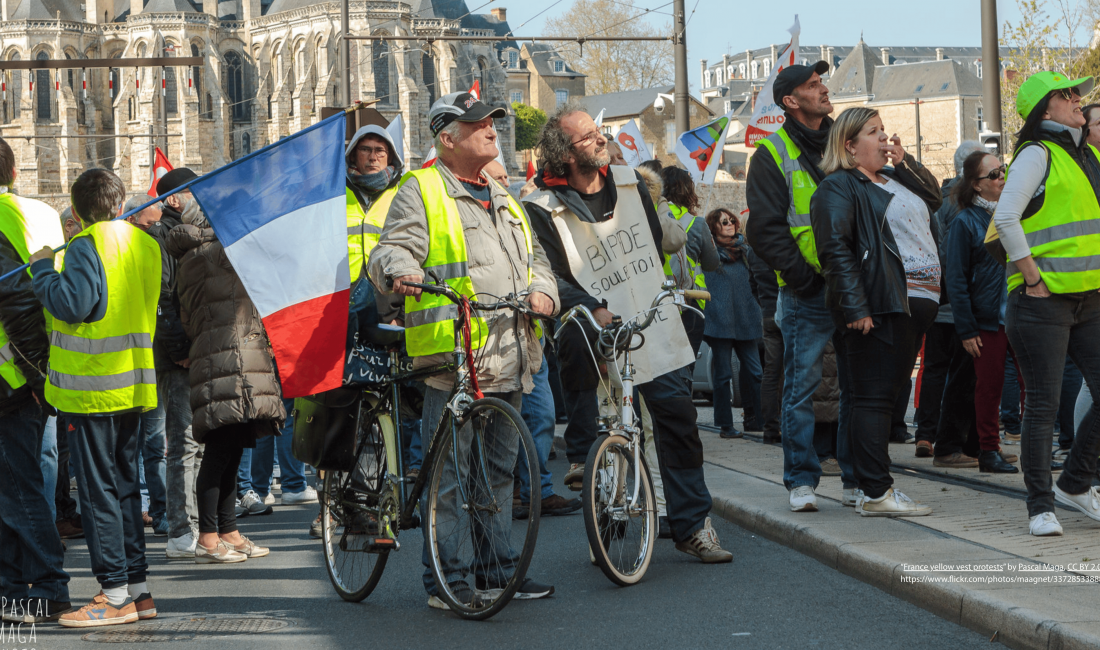
The story begins in the roundabouts and town squares of France during the winter of 2018-2019. The Gilets Jaunes (Yellow Vests) movement erupted across the country, initially protesting fuel taxes but quickly evolving into a broader cry for democratic reform. Protesters didn't just demand economic justice, they demanded a voice.
In response, the French government organised the Grand Débat National (Great National Debate), collecting citizen input through traditional Cahiers de Doléances, "Books of Grievances," a format dating back to the French Revolution. When researchers analysed these submissions, one demand rose above all others: direct democracy. Citizens wanted the power to initiate laws, challenge legislation, and have a real say in constitutional matters—not just vote for representatives every five years.
A Bold Proposal Inspired by Oregon
Fast forward to 2025. Green Party MP Marie Pochon has transformed that citizen demand into concrete legislative action. Her constitutional reform proposal, refined by democratic scholars Clara Egger and Raul Magni Berton from the organisation Démocratie Ouverte, draws inspiration from an unlikely source: Oregon, USA.
The proposal introduces three revolutionary mechanisms:
- Citizen-initiated constitutional amendments – allowing citizens to propose changes to France's fundamental law
- Facultative (suspensive) referendum – giving citizens the power to challenge laws passed by Parliament before they take effect
- Legislative initiative at national and local levels – enabling citizens to propose new laws directly
Critically, the proposal includes citizen assemblies- randomly selected groups of everyday people - to deliberate on initiatives before they go to a vote, ensuring informed public debate rather than knee-jerk reactions.
Democracy on Trial: The February 4th Committee Debate
On February 4th, 2026, the proposal faced its first major test in the National Assembly's Law Committee. The debate revealed a stark political divide that goes to the heart of what democracy means in the 21st century.
Conservative opponents rejected the proposal outright, arguing it would "destroy representative democracy" and lead to disastrous decisions. They pointed to California and Switzerland as cautionary tales - claims that run directly counter to extensive academic research showing that direct democracy mechanisms generally produce sound, stable policy outcomes.
The far-right Rassemblement National took a contradictory position: opposing citizen initiatives on constitutional matters and facultative referendums (which they claimed would undermine parliamentary supremacy), while simultaneously supporting mandatory referendums, including on EU membership questions. The message was clear: referendums are acceptable only when they serve a nationalist agenda.
President Macron's party also rejected the proposal, preferring to maintain the current top-down system.
The proposal passed the committee but faced an uncertain future.
February 12th: Obstruction Tactics Prevail
On February 12th, 2026, during the Greens' niche parlementaire—a special parliamentary session where opposition parties can set the agenda—the proposal faced its moment of truth. But it never reached the debate floor.
Right-wing parties and Macron's Ensemble pour la République deployed a classic parliamentary obstruction tactic: flooding the process with amendments designed solely to run out the clock. Individual MPs submitted more than 50 amendments each, not to improve the proposal, but to prevent it from ever being discussed.
The tactic worked. The proposal could not be debated within the limited time allocated to the Greens' session.
While the obstruction was a tactical defeat, the proposal has achieved something significant: it has placed direct democracy firmly back on France's parliamentary agenda at a crucial moment.
With French local elections in 2026 and national elections in 2027 on the horizon, the debate over citizen power is now impossible to ignore. The Yellow Vests' demand for democratic reform, documented in thousands of Cahiers de Doléances, has been translated into a concrete legislative proposal, debated in committee, and blocked only through procedural maneuvers.
The question is no longer whether France will discuss direct democracy, but when and under what terms.
Why This Matters Beyond France
France's debate is part of a global awakening. From Taiwan to Iceland, from citizens' assemblies in Ireland to participatory budgeting in Brazil, people everywhere are demanding more than the right to choose their rulers, they want the right to shape the rules themselves.
The arguments against Pochon's proposal aren't new. Every expansion of democracy, from universal suffrage to direct election of senators, has faced similar resistance from those invested in the status quo. They always warn of chaos, incompetence, and the dangers of "mob rule."
Yet the evidence tells a different story. Research consistently shows that direct democracy mechanisms, especially when combined with deliberative processes like citizen assemblies, produce thoughtful, balanced outcomes. They increase civic engagement, build trust in institutions, and create more resilient, responsive governance.
The Road Ahead
The obstruction on February 12th reveals something important: opponents of citizen power fear open debate. They blocked the proposal not through argument, but through procedure—not by winning the discussion, but by preventing it. This tells us the proposal has political force. Ideas that can be easily dismissed don't require 50+ obstructive amendments per MP to stop.
As France heads toward elections in 2026 and 2027, the choice is clear:
Will political parties embrace the democratic innovations that citizens demanded during the Yellow Vest movement?
Or will they continue to protect a top-down system designed for the 18th century?
The debate has begun. The obstruction shows its importance. And history suggests that once citizens begin demanding real power, representative institutions eventually yield—or face deeper crises of legitimacy. The Yellow Vests asked for a voice. Marie Pochon gave them a proposal. Parliament blocked it with procedure, not principle. The fight for direct democracy in France has just begun.
Parliamentary obstruction may delay democracy, but it cannot defeat the demand for it. The question is not whether France will evolve, but whether its political class will lead that evolution or be swept aside by it.