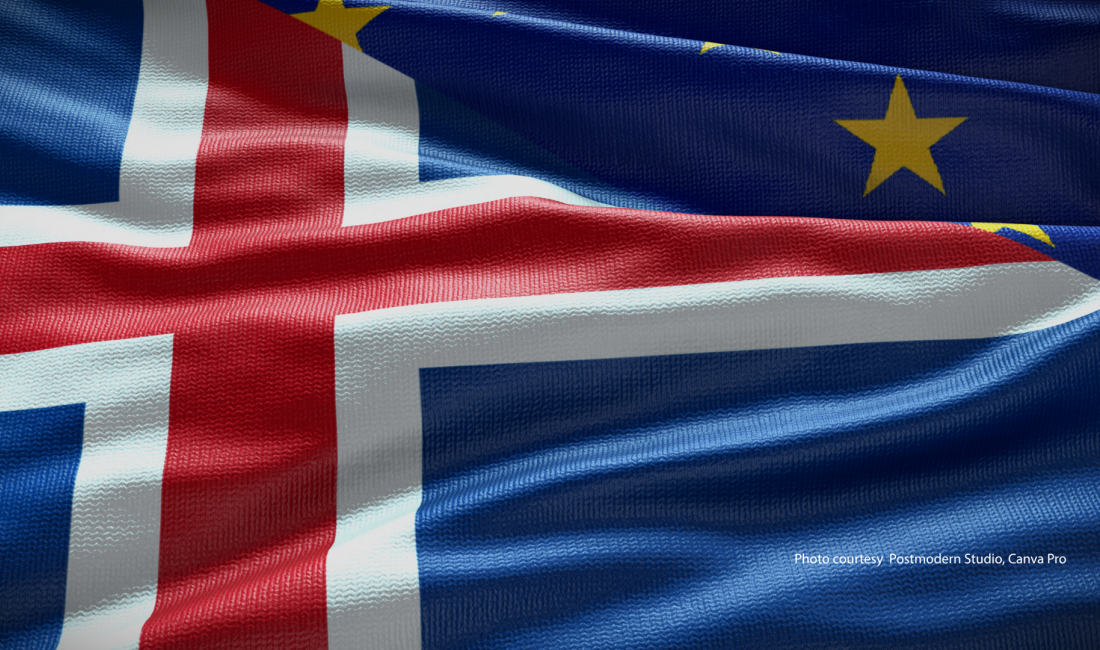
I’ll admit it. I would have preferred a different result. On 29 August, Icelanders voted 52.8% to 47.2% against reopening negotiations on joining the European Union. With turnout above 82%, Icelanders clearly took the question seriously.
But there is no need to panic. Iceland did not reject Europe, and it certainly did not turn its back on the European Union. In many ways, Iceland already has much of what it wants from the EU, and the EU has much of what it wants from Iceland.
Through the European Economic Area, Iceland participates in the EU’s Single Market. It is part of Schengen. Its citizens already enjoy extensive freedom to live, work, study and travel across Europe, and Iceland incorporates a substantial amount of EU legislation into its own legal system. That makes the status quo quite comfortable.
What EU membership would have changed is something more political. It would have given Iceland a seat at the table where many of the rules it already follows are made. Icelandic citizens would have elected representatives to the European Parliament. The Icelandic government would have gained a vote in the Council. Membership would have strengthened Iceland’s political standing within Europe and expanded the democratic rights of its citizens within the European Union.
I do regret that Icelanders decided not to take that step, but Iceland remains a close European partner. The Single Market does not disappear. Schengen does not disappear. Decades of cooperation do not disappear. The relationship continues.
So rather than treating Iceland’s vote as a crisis for EU enlargement, we should treat it as a lesson for how we do enlargement. And that lesson is about when citizens get a say.
A referendum should not be the beginning of the public conversation about EU membership. It should be the culmination of it.
Too often, accession is treated as a technical and institutional process: governments negotiate, chapters are opened and closed, reforms are assessed, and citizens are informed about the results. Then, somewhere near the end, voters may suddenly be asked to make one enormous political decision: yes or no?
That’s not enough.
The real questions of enlargement are political and societal ones. What does joining the EU mean for our country? What will we gain? What might we have to give up? Where are we willing to compromise? How will membership affect our economy, our sovereignty and our communities? And ultimately, what kind of European Union do we want to belong to? Those conversations need to happen long before a referendum campaign begins.
And this isn’t only a lesson for candidate countries. As Montenegro, Albania, Ukraine, Moldova and others move forward through the accession process, citizens inside the European Union also need to be part of the conversation. Enlargement will change the Union they belong to, too. In some Member States (France guaranteed), citizens may ultimately be asked directly to approve future enlargements.
If that moment comes, democratic engagement cannot suddenly begin three months before people go to the polls.
Governments, political parties, civil society, and EU institutions should be talking to citizens about enlargement right now. That means public debates, local dialogues, citizens’ assemblies, and consultations that allow people not simply to just receive information about enlargement, but also to question it, challenge it, and help shape the political choices around it.
Iceland said no. I wish it had said yes. But democracy also means accepting that citizens may make a different choice than the one we would have preferred.
The task now is not to panic about Iceland. Iceland and the EU will remain close partners.
The task is to learn from it. If Europe is serious about enlargement, it cannot wait until referendum day to start convincing Europeans of it.