Climate change is a challenge that affects everyone, but not everyone gets the same opportunity to have a say in how we respond to it.
Across Europe, new ways of involving people in climate decisions are emerging. Citizens' assemblies, youth-led initiatives, community projects, creative approaches and other forms of participation are creating opportunities for people to contribute beyond simply voting in elections.
But what makes these approaches work?
And, perhaps more importantly, what can others learn from them?
These are some of the questions being explored through Citizens for Climate, a European project bringing together different experiences of climate participation. As part of the project, seven organisations are hosting Participation Pop-Up events to explore and share practices from their own contexts.
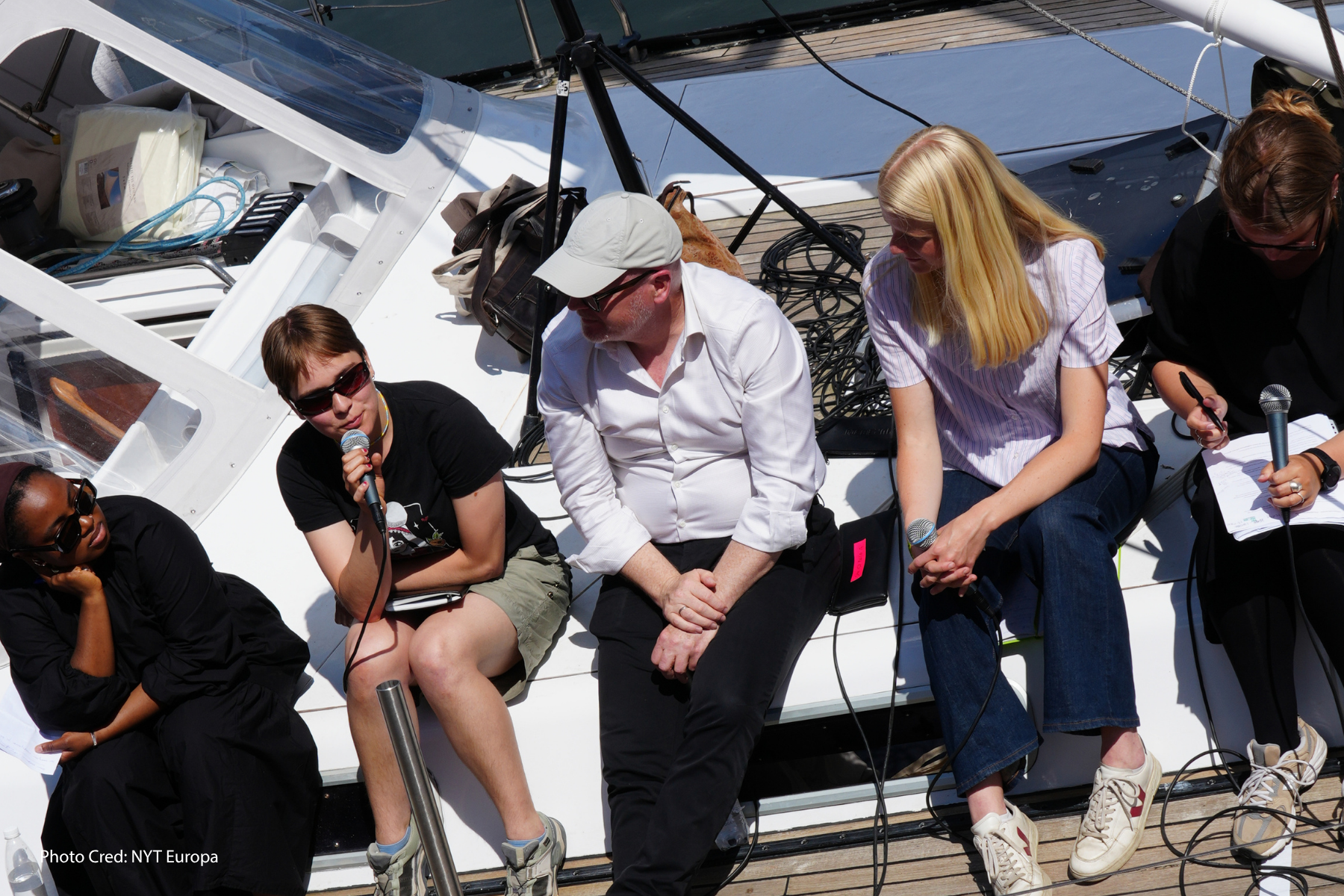
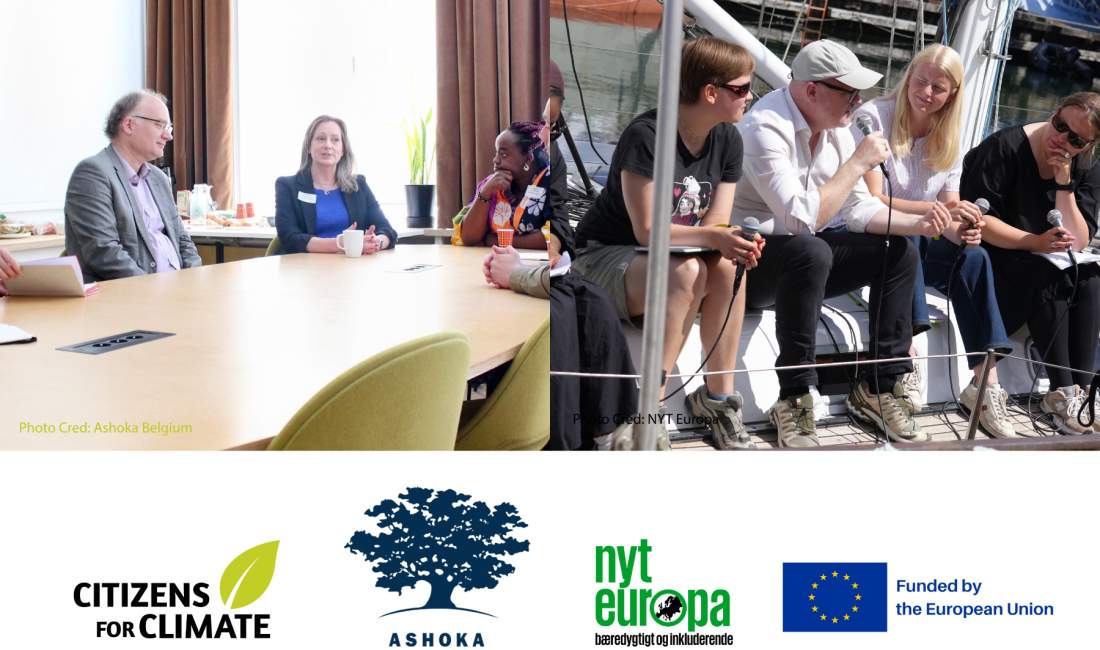
Two of these events, hosted by Nyt Europa in Denmark and Ashoka Belgium, brought together different experiences, perspectives and approaches to climate participation. Rather than looking for one answer, the events created opportunities to compare what participation can look like in different places and to reflect on what makes it meaningful.
The result was not a single model to follow, but a collection of ideas worth taking forward.
1. Participation can take many forms
One of the clearest insights from the two events was that there is no single way to involve people in climate decision-making.
In Denmark, the Pop-Up took place at Folkemødet, creating a space for conversations about climate and participation within a wider democratic festival.
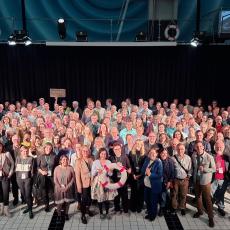
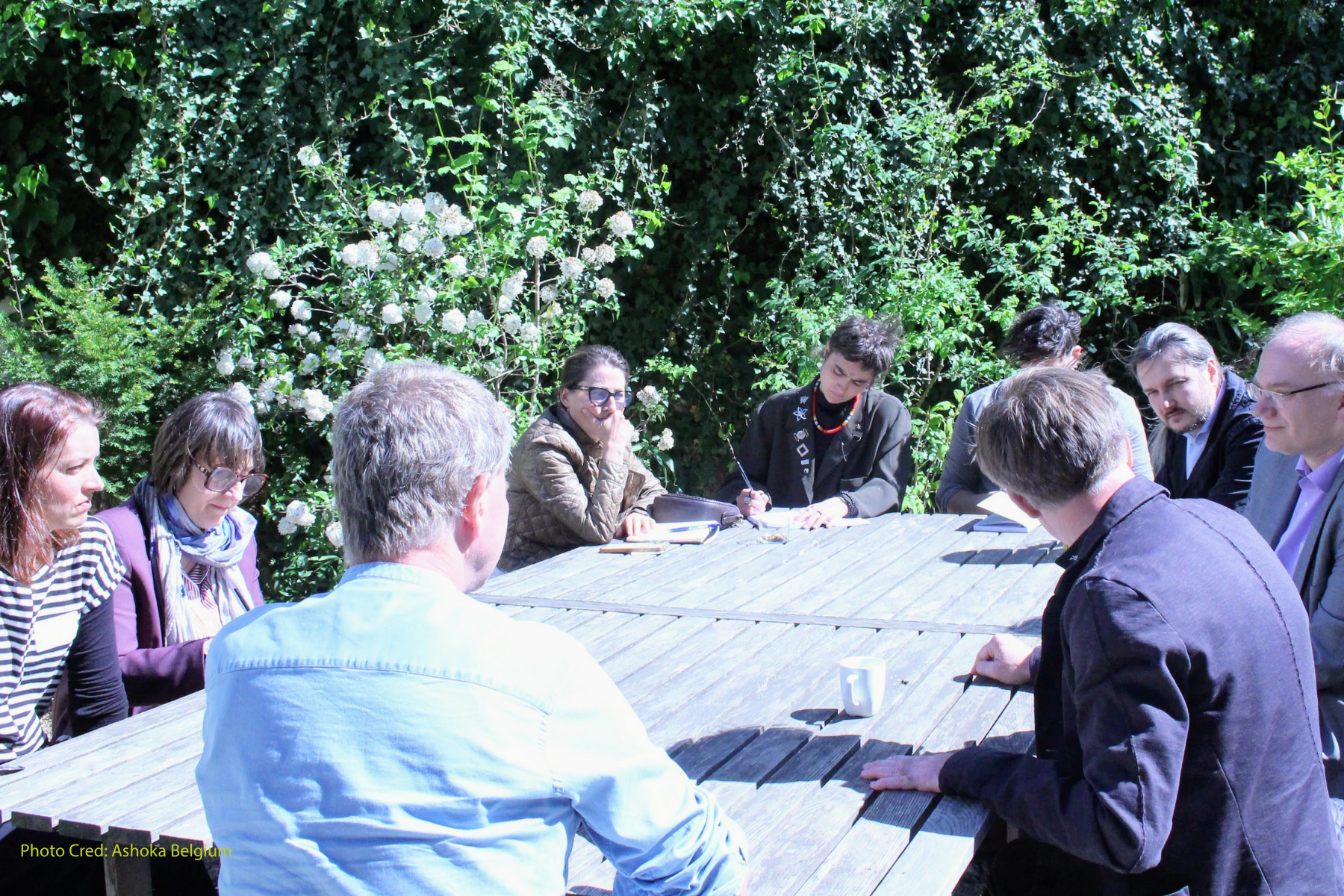
The Belgium Pop-Up brought together examples and experiences from different contexts, including citizens' assemblies, youth-led climate work, campaigns, community approaches and creative forms of engagement.
Together, the events showed the breadth of approaches that can be used to bring people into climate conversations.
Some approaches create spaces for citizens to deliberate and make recommendations. Others focus on connecting young people with decision-makers, supporting community-led ideas or using creative ways to engage people.
The important lesson is that participation needs to respond to its context.
What works in one community may not look the same in another, and that is not a weakness. It is part of what makes participation meaningful.
2. People need more than an invitation
Another important insight was the need to think carefully about how people are brought into participation.
Simply inviting people into a formal discussion does not guarantee that they will feel able or willing to contribute.
The experiences shared during the Belgium Pop-Up included approaches that make climate issues more accessible and relatable. The work of SustyVibes, for example, showed how sustainability can be connected with activities and forms of culture that already engage young people.
The Danish Pop-Up similarly demonstrated the value of bringing conversations into an existing public space through Folkemødet.
These examples point towards a broader question for anyone organising a participation process:
Are we asking people to adapt to our way of participating, or are we creating participation around the people we want to involve?
That question can change everything, from the location and format of an event to the way information is shared and how people are supported to contribute.
3. Different voices create a fuller picture
The events also highlighted the value of bringing different kinds of knowledge together.
Climate issues are complex. Scientific knowledge is essential, but so are the experiences of citizens, communities, civil society organisations, policymakers and other groups affected by climate decisions.
One example discussed during the Belgium Pop-Up was the Brussels Permanent Citizens' Assembly on Climate, which brings together academic expertise, stakeholder perspectives and the experiences of randomly selected citizens.
The discussion showed how these different perspectives can complement one another rather than compete.
The same principle was visible in the range of people and perspectives brought together through the Denmark Pop-Up.
This matters because climate decisions do not exist only on paper. They affect people's homes, jobs, communities and everyday lives.
Listening to different experiences can help reveal questions and consequences that may otherwise be missed.
4. A conversation needs somewhere to go
Perhaps one of the most important reflections from the events was the relationship between participation and influence.
People may be willing to share their ideas, but meaningful participation depends on what happens afterwards.
The Belgium Pop-Up explored examples where this connection is built into participation. In the Brussels Permanent Citizens' Assembly, for instance, the government must justify rejecting citizens' proposals.
This creates a clearer link between being heard and being taken seriously. The discussions also raised an important question for participation more broadly:
Why are citizens invited into the conversation, and why does their voice matter?
It is a question worth asking before any participation process begins, not after it ends.
5. There is value in learning from what already exists
The Pop-Ups were not about starting from scratch.
Across the examples shared in Denmark and Belgium, participants spoke about approaches they are already using or have seen from others.
These included citizens' assemblies, youth participation, community-led initiatives, creative engagement, campaigns, technology-based approaches and traditional forms of collective action.
Bringing these experiences together creates an opportunity that is often missing from individual projects: the chance to compare, question and learn from one another.
A practice developed in one place may inspire a completely different approach somewhere else.
An approach that works well in one context may raise questions about what needs to change before it can be used elsewhere.
And an example that did not work as expected can be just as valuable as a success story.
That is what makes the Participation Pop-Ups important. They are not simply events. They are part of a wider process of learning about what climate participation can look like in practice.
The experiences from Denmark and Belgium are part of a much bigger learning journey.
Seven organisations across Europe are hosting Participation Pop-Up events to explore how people can become more involved in climate decisions. Each event brings its own experiences, ideas and local context.
The goal is not to find one model that everyone has to follow.
It is to learn from what is already happening.
What helps people feel welcome?
What makes people want to take part?
What helps different voices be heard?
What turns a conversation into real influence?
And what can others learn and use in their own communities?
The ideas gathered through these events will contribute to the Climate Participation Booklet, which will bring together practical examples and lessons for people and organisations interested in creating better ways for citizens to take part.
But you do not have to wait for the booklet to start.
What could inclusive climate look like where you are?
Maybe it is a conversation with young people about a climate issue in your neighbourhood.
Maybe it is a film night followed by an open discussion.
Maybe it is a workshop where residents and local decision-makers work on an issue together.
Maybe it is taking a climate conversation into a public space where people already gather.
Or maybe it is something completely different.
The important thing is to start with the people you want to involve and create a space where they can genuinely contribute.
Citizens for Climate has created a Participation Pop-Up Guide to help you do just that. The guide offers practical ideas and steps for organising your own session, so you can bring people together, explore climate issues and learn from the experience.
Because better climate decisions do not only need better policies.
They need more people to have a real say in shaping them.
Your ideas could become part of the bigger picture
The Participation Pop-Ups are not only about what happens during each event. They are about building a growing collection of ideas and experiences that can help shape the future of inclusive climate democracy.
So, if you try something new in your community, tell us about it.
What worked? Who took part? What surprised you? What would you do differently next time? Perhaps you found a simple way to involve people who are usually left out of climate conversations, discovered a creative format that brought people together, or found a new way to connect citizens with local decision-makers.
We want to hear about it.
Share your experiences and findings with the Citizens for Climate team, and your ideas could contribute to our wider learning and potentially be featured through our next article. Your experience could also give another organisation the inspiration to try something similar in their own community.