David Holt Says His Now Olympic City Succeeds Because "We Invest In Ourselves"
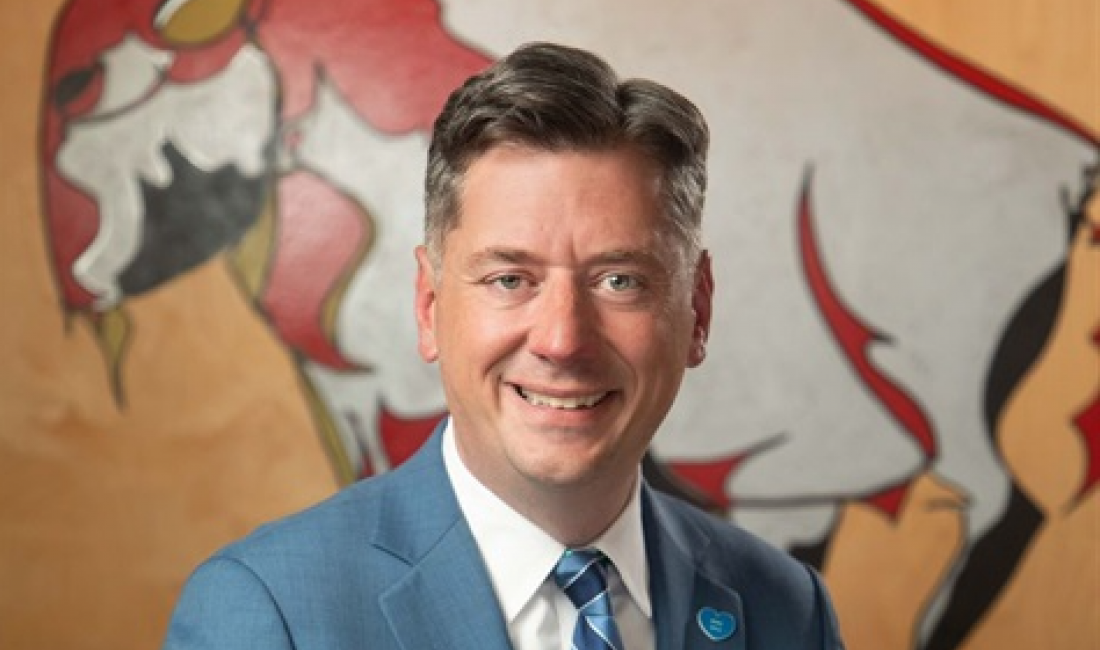
Mayors don’t get more popular than David Holt of Oklahoma City. He just won a third term with 86.5 percent of the vote. That’s up from 2018, when first won the office with with 78.5 percent of the vote, the largest percentage achieved by a non-incumbent since 1947, and from 2022, when he was re-elected with more votes than any candidate for Mayor since 1959. Holt is the first Native American mayor of Oklahoma City. At the time he took office, Holt was the youngest mayor of Oklahoma City since 1923 and the youngest mayor of a U.S. city with more than 500,000 residents.
Holt is not “a strong mayor.” He’s a member of the city council, and there’s a city manager. But he’s such a relentless builder and promoter of his city that he has become a national force, now serving as president of the U.S. Conference of Mayors, which meets in Long Beach, California, June 4-7.
Below are excerpts from my conversation with Mayor Holt on a recent visit to Los Angeles. Much of our conversation was about the mayor’s favorite topic, Oklahoma City, which remains a fast-growing dynamic place at a time of some stagnation for cities and the U.S. population/
We started out talking about MAPS ((Metropolitan Area Projects) is a visionary, voter-approved capital improvement program in Oklahoma City that has fundamentally transformed the city’s infrastructure, economy, and quality of life since 1993. It’s funded by temporary one-cent sales taxes rather than bonds, allowing the city to build major projects debt-free
Democracy Local: Thank you so much. It’s really a pleasure to meet you. So what is the story of MAPS?
Mayor David Holt: My pleasure. So, what I’ve done is lead the charge on four major tax initiatives since I became Mayor. MAPS 4 was in 2019. One of the hallmarks of MAPS is that we “pay as we go”—we don’t borrow. Because of that, it usually takes a little over a decade to roll it all out.
We’re about to cut quite a few ribbons over the next two years. We’re still going to break ground on things, including a new soccer stadium here in the next few months. Those are all MAPS 4 projects.
Then, in 2023, I ran the campaign for a new billion-dollar arena, which secured a 25-year commitment from the Oklahoma City Thunder to stay. In 2024, we ran a hotel tax—more for marketing the city than capital projects. Then, in October, we ran a bond issue funded through property taxes. That’s $2.7 billion, about 3x our biggest initiative ever, strictly for core infrastructure like streets and water mains. We have a lot of broken water mains here.
Democracy Local: Really? A lot of your stuff is younger than our stuff [in LA].
Mayor David Holt: We’re kind of spoken for a while regarding property and sales tax, unless we wanted to raise taxes, which is very challenging.Regional Transit and State Law
There is also the conversation about regional transit. We have an alliance—a Regional Transit Authority—with two of our biggest suburbs, Edmond and Norman.
DL: So Edmond and Norman are separate? They aren’t part of the city?
Mayor David Holt: No, they are two totally different cities with their own mayors. State law was created to allow this. We’ve never had a multi-city vote before. State law says the only funding method we can turn to is a sales tax. It would be a pooled electorate vote.
DL: And you have to win in all three?
Mayor David Holt: No, just a pooled electorate.
DL: Is it 50% plus one?
Mayor David Holt: Yes. We’ve been planning it for years. I appointed our state’s last Democratic Governor, Brad Henry, to chair it. It’s been a sort of retirement gig for him—it doesn’t pay, but it keeps him involved in a civic endeavor. But none of it means anything unless we get a funding source. We’ll have that conversation over the next couple of years to see if we can rally the community for a permanent sales tax.
DL: Permanent? How many years?
Mayor David Holt: It would be permanent. You have to operate it forever. In the early years, it would be loaded toward capital, then shift toward operations. The debate now is: what are the projects? Is it light rail or Bus Rapid Transit (BRT)?
DL: Not a subway?
Mayor David Holt: Definitely not a subway. That’s too pricey and we’re too spread out. We have land above ground. But our growth is putting pressure on the transportation situation. Traffic used to be a foreign concept here—it meant you slowed down to 50 mph during rush hour. Now there’s a real rush hour. When I was born, we were the 37th largest city; now we’re the 20th largest.
The Philosophy of Self-Investment
DL: The growth, the jobs, the planning... your “State of the City” addresses are great, by the way. They tell a story. In the early 90s, you put water in the Oklahoma River and all that... but the story is there’s no “one thing,” right? It’s careful planning over many years.
Mayor David Holt: If I could distill it to one thing, it would be investing in ourselves. Since 1993, we have passed 15 tax initiatives at the city level to fund building or maintaining things. We are 15 and 0. The total dollar amount is just under $10 billion, not even adjusted for inflation. That’s made all the difference. Most mayors would dream of doing just one of the 50 things I’m getting to do because of our commitment to ourselves.
DL: And you’re still a Law School Dean?
Mayor David Holt: I am also the Dean of our law school, yes. It’s not for everybody. I’m burning the candle at both ends. I’m also the President of the Conference of Mayors.
Global Collaboration and the “Mayor Network”
DL: Do American cities collaborate enough with each other? Are there things they should be collaborating on more intensely?
Mayor David Holt: I’m not the most objective person to ask because I’m so involved in the Conference of Mayors. But it’s very mayor-dependent. We have 500 members, but maybe 300 to 400 are truly active. Some are just disengaged.
DL: What are you trying to get done in this role?
Mayor David Holt: I describe our organization as a three-legged stool:
-
Advocacy in Washington: In friendly administrations, we play a huge role in policy-making, like the bipartisan infrastructure bill.
-
Best Practices Sharing: It’s a laboratory of democracy. You learn a lot from other cities.
-
Personal Support: Being a mayor can be lonely. Your mental health as a leader matters. It’s nice to have friends who know exactly what you’re going through.
DL: In Europe, cities like Helsinki and Amsterdam created a joint agency for AI experimentation. Rotterdam and Jakarta have a think-tank for sea-level rise. Why the lack of international engagement for US Mayors?
Mayor David Holt: Two reasons. One: we are much more accountable for our travel.
DL: If you take a few flights on Turkish Airlines, everyone is unhappy with you.
Mayor David Holt: Bloomberg does a good job of pulling mayors to other countries because they pay for it.
The second reason is typical American self-absorption. In other countries, you have to engage with neighbors. In the US, we think we can live a full life just within our borders. You can’t drive two hours in Europe without accidentally entering another country. For us, it feels like an unnecessary luxury.
The Olympics and the “Okie” Connection
DL: Does that change now that you’re taking in the Olympic event for... what is it, that canoe thing?
Mayor David Holt: It’s called Canoe Slalom. It’s an Olympic sport. We have the whitewater facilities for it. That, plus our NBA team, puts us on the international stage.
DL: Are there new international flights coming to OKC?
Mayor David Holt: We just got our first international flight in modern times—to Cancún. So we’ve finally put the “International” in our airport name.
DL: What do you make of Los Angeles? We’ve had a hell of a 2025 between fires and housing problems.
Mayor David Holt: LA is so much bigger; it’s like a different species. But we have a special relationship right now [with the Olympics], and I’m appreciative of that. I’m also a big fan of any electoral system—like California’s non-partisan primaries—that allows all voters to see all candidates. We’ve used it in OKC for 100 years. It incentivizes candidates to build coalitions across partisan lines.
DL: My great-grandmother moved from Oklahoma to California in 1939. She was a true “Okie.” Do LA and Oklahoma City still have a deep connection?
Mayor David Holt: Because of the Olympics, I’ve tried to draw on that narrative. There was a tremendous migration. There are other fun connections, too. Will Rogers is a big one. Ed Ruscha graduated high school in Oklahoma City, and people in LA think he’s quintessential LA. We currently have the Dodgers’ Triple-A team in Oklahoma City. And Russell Westbrook is still one of our most beloved guys, and he’s from here [LA].
DL: Anything else you want to brag on?
Mayor David Holt: I think we’re worthy of your attention because we’re definitely one of the most dynamic cities in America right now.