You might be wondering how a topic like citizens’ assemblies, something that can easily feel technical or political, can actually become engaging for young people.
This is how we did it in Vallendar.
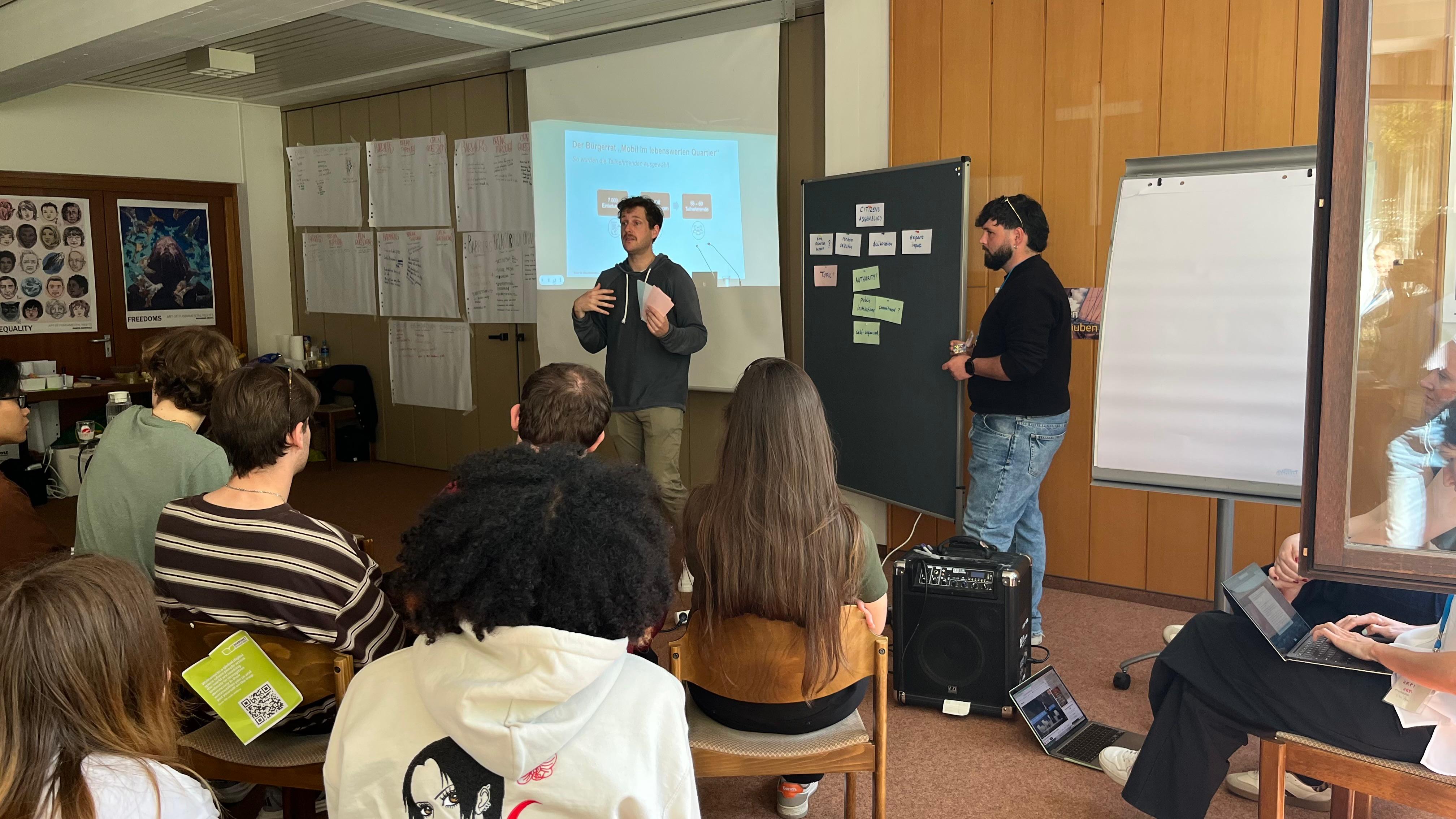
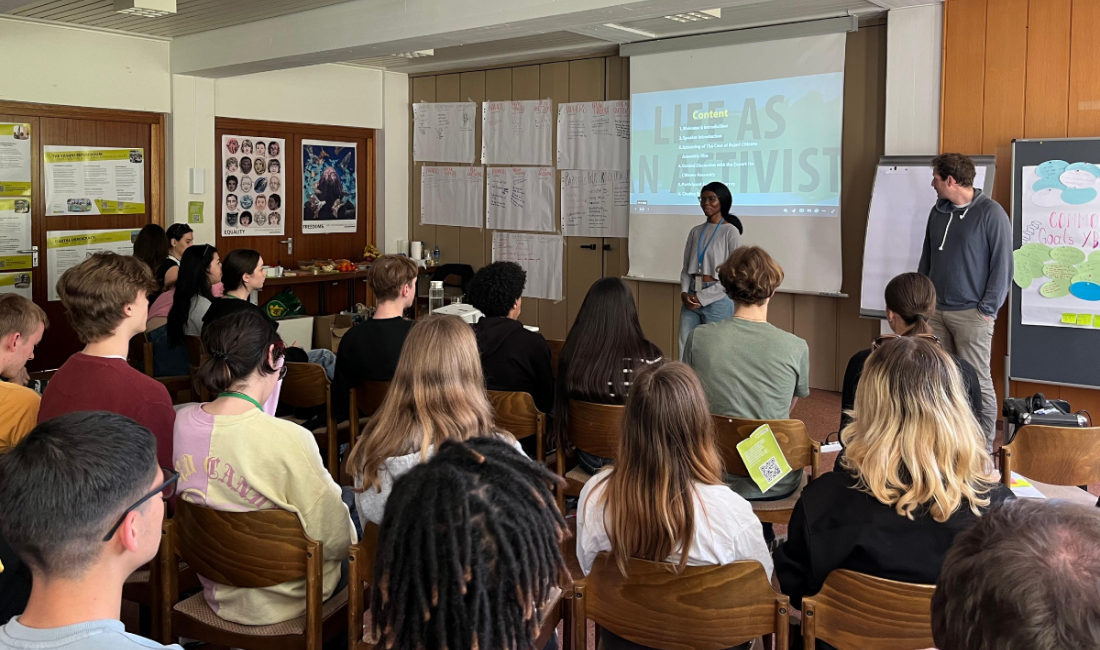
At Youth Bridges Europe in Germany, I joined 60 young people from France, Germany, and Bosnia-Herzegovina in a workshop that turned direct\participatory democracy from something we usually hear about into something we actively experienced. Instead of just talking about participation, we were placed inside it.
The session focused on citizens’ assemblies, but it didn’t start with definitions or theory. It started with a story. To get inspired and ground our discussion, we first explored the story of the Bujaru Citizens’ Assembly in Brazil, the country’s first climate citizens’ assembly, and the work of Delibera Brasil, an organization dedicated to strengthening democracy through deliberative processes. This case illustrated how participants were selected and how the process had to be carefully adapted to the local context and the needs of those involved.
Importantly, it also highlighted the challenges, issues of accessibility emerged strongly, particularly the need for organizers to provide practical support, such as transport, to ensure that participants were able to take part fully in the discussions. Overall, this real-life example offered a valuable framework for understanding citizens’ assemblies, shedding light not only on their potential but also on the practical considerations required to make them inclusive and meaningful.
From there, Thomas Leszke from Zukunftsrad Köln guided us into the depth of democracy. We began with what most of us already know, representative democracy, and then moved into something less familiar: deliberative democracy. At first, it sounded complex, but through discussion it became clearer. It is not about everyone deciding everything all the time, but about creating spaces where people can think together, learn together, and decide together.
What made the session powerful was how practical it felt. Citizens’ assemblies were not presented as abstract tools of democracy, but as spaces where people stay in the process, listen deeply, and work through difficult issues together. Even the question of expertise was reframed. People are not expected to come in as experts; instead, they learn along the way, supported by input from specialists who inform rather than decide.
One thing that stood out for me was the tension we discussed: participation is powerful, but who chooses the agenda? And what happens after citizens make recommendations? This is where the idea of accountability became important. Without it, participation can easily lose its meaning. Thomas explained that topics are often proposed by public institutions, but this can create challenges: “Sometimes politicians use citizens’ assemblies for public relations. But it’s a lot of work, so if they initiate it, they often expect something in return.” Participants reflected on the risks of political manipulation, including situations where authorities initially support initiatives but later withdraw commitment. One key takeaway was the importance of securing public commitments from decision-makers to ensure accountability.
Later, we moved into group work where we imagined citizens’ assemblies in our own communities. That is when the topic became even more real. We discussed issues like affordable housing, sustainable mobility, and climate resilience, things that directly affect everyday life. It became clear that the best topics are not simple ones, but those that are complex, urgent, and shared.
By the end of the session, citizens’ assemblies no longer felt like a distant democratic tool. They felt tangible, something that could actually exist in our own contexts.
And what stayed with me most is this: democracy is not only about systems or institutions. It is about people coming together, listening, disagreeing, and trying to find solutions collectively.
In Vallendar, democracy was not something we were just learning about. We were able to visualise it as something practical and possible for our own context.