The Hungarian 3-step plan to beat an authoritarian.
Autocrats around the world will study Orbán’s successes: how to consolidate power over time, how to reward loyalists, how to weaken watchdogs, and how to loot the state while looking like you’re patriotic.
But what we should do is study his opponent’s success and Orbán’s failure - how even a heavily advantaged incumbent can be beaten by a challenger who understood credibility, discipline, and grassroots organising.
After sixteen years in power, Orbán had built what looked like the modern strongman model inside the EU. He had it all: media dominance, captured institutions, enormous resource advantages, and an electoral system built to favour his own party.
And still, he lost.
For years, we in democracy circles have treated authoritarian-leaning leaders as politically invincible once they had tilted the playing field. Hungary reminds us that, yes, political systems can be engineered, narratives can be controlled, and institutions can be bent, but you can still lose.
I was in Hungary as an election observer, speaking with journalists, watchdog groups, campaigners, and voters on the ground. Simply, the opposition understood the assignment.
This is their three step plan to beat an authoritarian.
First: credibility beats purity
Péter Magyar was not the perfect opposition candidate. He was the effective one.
As a Fidesz party member just two years ago, his insider-turned-outsider profile gave him credibility with voters who had accepted the status quo. In Hungary, that credibility came from exposing corruption from within.
In another country, credibility may look different. It could be a mayor who fixed services, a candidate who is radically transparent about their campaign donations, a union leader trusted on wages, or a civic organiser trusted locally.
The lesson is not to copy the person, but rather to have a credible candidate that people can believe.
Second: make politics tangible
Magyar did not run an ideological campaign. He largely stayed away from culture wars. Instead, he connected the cost of corruption to everyday life. How 16 years of Orbán’s corruption has led to higher prices, weaker hospitals, poorer services, frozen EU funds, opportunities stolen from ordinary people to enrich Orbán’s inner circle, and a country falling behind.
He didn’t run a left versus right campaign, instead, he ran a top versus bottom campaign. Corruption versus accountability. He turned a democratic problem into a kitchen-table problem that people could repeat.
Third: tactics beyond the base
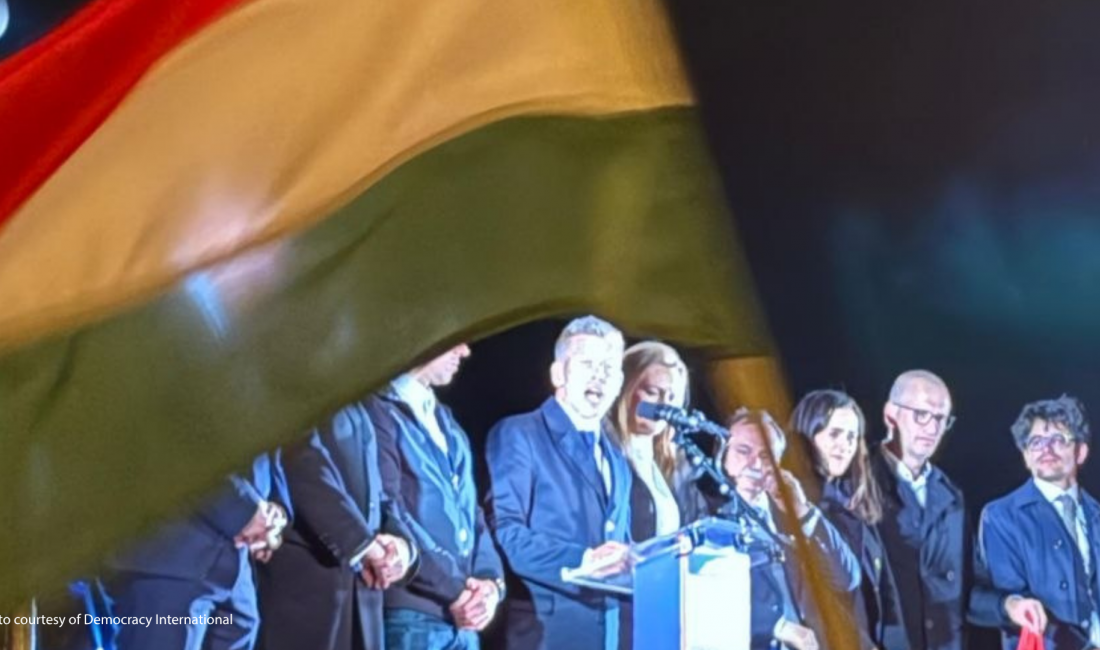
TISZA lacked the money and media machinery of the state. Magyar himself wasn’t granted a single minute on public news outlets. Instead, he created a campaign around tens of thousands of volunteers in what was called “Tisza Islands” and for two years headed in the Hungarian countryside, in Fidesz strongholds, to knock on doors and build credibility and relationships with those communities. He held several campaign rallies across several villages a day, bringing out crowds in record numbers. Magyar famously walked 300 kilometres over two weeks from Budapest to Transylvania, turning the walk into a live campaign story in realtime online.
As the traditional media landscape was closed to him, he had no choice but to use social media in a smart and savvy way. His content was going viral, creating a sense of excitement around his campaign, while his opponent Orbán’s looked out-of-touch and “like an angry, drunk uncle at the dinner table”, as one Hungarian said.
Crucially, he made change feel possible.That is often the missing ingredient. Many voters dislike entrenched leaders, but fear instability more. Magyar lowered the psychological cost of change.
The lesson from Hungary is simple. Even a system designed to protect the incumbent can fall.
Get the candidate right. Get the message right. Get the machinery right.
Autocrats will study how Orbán held onto power.
But democrats everywhere should study how he lost.