This Blog is the personal experiences of the authors about the trips to the War Childhood Museum in Sarajevo, and the Srebrenica–Potočari Memorial and Cemetery.
Children in War
by Minh Quoc Hung Dang
As someone who was born and raised in a time of peace, war was, for me, just the stories told by my grandparents; I could not imagine what it would be like in reality. However, when I entered the War Childhood Museum, war seemed to unfold right before my eyes, and I understood more about the people who lived through the wars.
The museum was founded by Jasminko Halilović, a “war child". The purpose of the War Childhood Museum is not simply to document the history of war, but to focus specifically on the childhood memories of those who grew up during the war. The museum’s goal is to show the world another side of war, where there are not battles but the memories of those who remain, the pain, loss, fear, regret, and commemoration.
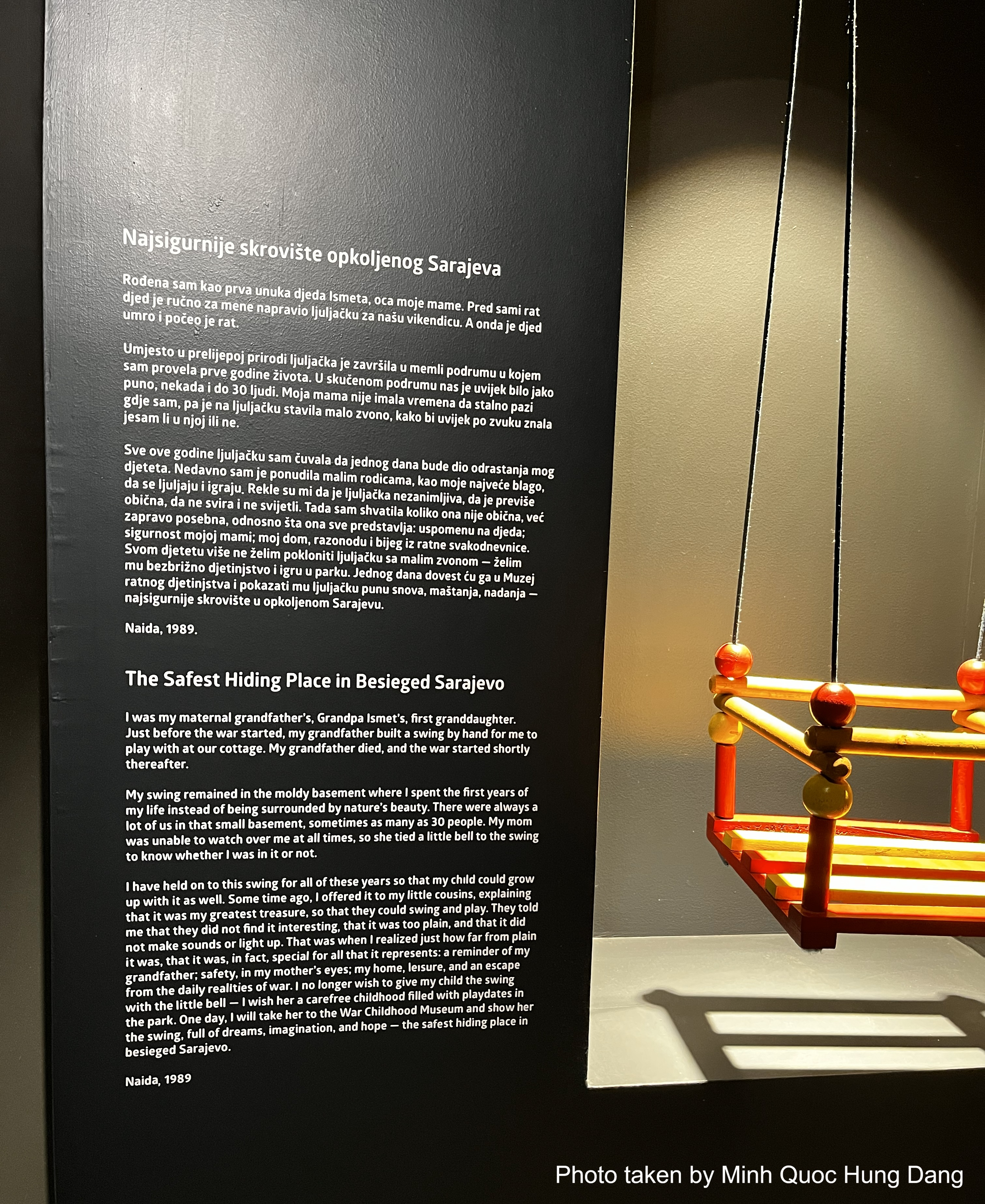
Entering the museum, visitors are met with a collection of stories and objects that reflect the experiences of children growing up during the war. One of the stories that stayed with me the most is Naida’s swing. During the war, Naida’s mother was so busy that she couldn’t always take care of her, so she tied a small bell to the swing that Naida’s grandfather had made. The sound of the bell would let her know whenever Naida was there. The story of Naida says the pain of war, but it was soft and quiet, with no bombs or dead people; it was the childhood loneliness of a child in a basement. And at the end of her story, there was this deep, touching quote: "I no longer wish to give my child the swing with a little bell; I wish her a carefree childhood filled with playdates in the park". This is the mother's wish to heal and break the cycle of war, and to give her child a life untouched by the trauma like her own.
After the trip, I felt that I understood more about the fate of those less fortunate. Sometimes what others do that I cannot understand comes from what they have experienced in the past. War is not only pain, but it is also about the courage of those who survive and choose to continue. The war stories passed down to the next generations are not to spread hatred but lessons of peace. After spending more than an hour inside, I stepped out of the museum, one question kept echoing in my mind: What story would I carry with me for the rest of my life if I had been a “war child”?.
The Srebrenica Genocide Museum & Memorial
By Henry Kroll
From Sarajevo, we took a long bus ride across the mountainous region of Bosnia to Potočari, the town close to Srebrenica, where the genocide took place in the Bosnian War in 1995. Truth be told, I had little to no previous knowledge about Srebrenica and the War itself, as sadly it was not part of our history classes at school. So there I was, ready to learn about this part of recent history in all of its details.
Fittingly, the museum was built inside the former Dutch UN peacekeeper base, which played an important role in the genocide. It was established to support the enclaves, including Srebrenica, but ultimately failed to do so. Our tour guide was a woman who helped with founding the memorial, collecting information, and expanding the museum ever since. She also shared her story, as she and her family were also inhabitants of Srebrenica when the genocide took place. Seeing pictures and recordings of the UN base and seeing the same rooms and places in the present today made me feel truly immersed in Srebrenica's past. Suddenly, it wasn’t just an incident from distant times anymore; it was very much alive and tangible, even in the modern day.
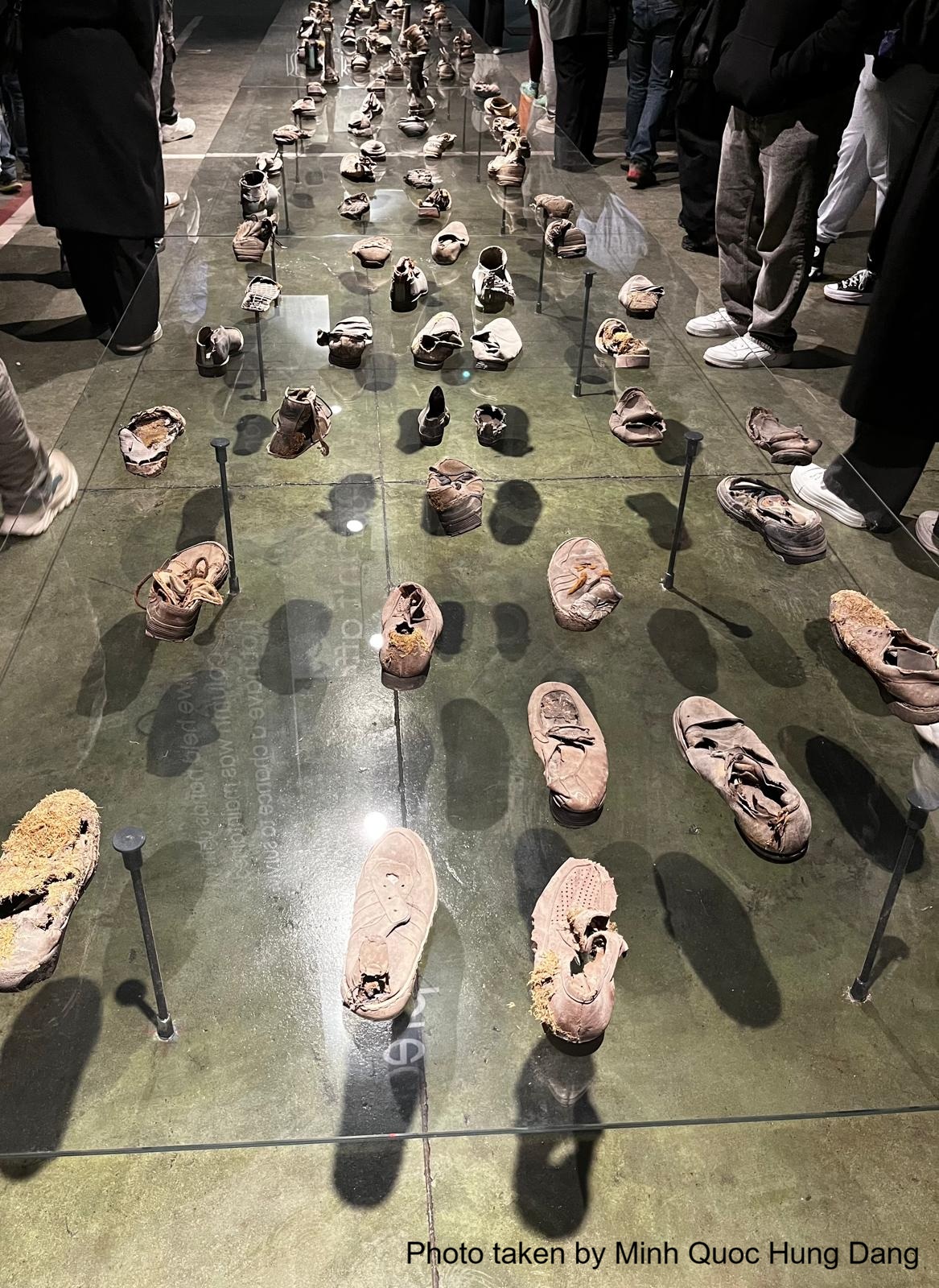
However, what stuck with me the most were the recorded stories of witnesses who were present when the genocide happened. Most of them lost a part of their family back then, and their words were carried by these heavy emotions, wounds that never fully healed. There was a long, dark corridor with monitors, each showing a different video from a person about an incident during the war, when the Srebrenica school playground was struck by grenades, killing 73 people. Only when I heard the stories from many different perspectives of the same moment, each with its own losses and witnessed horrors, could I grasp what this number really means and how many people were affected that day.
We left the museum after 3 hours, unfortunately, not enough time to explore everything. But we still had the adjacent memorial ahead of us. Compared to the museum, it was way quieter, so we were left alone with our thoughts. It is very hard to describe how I felt seeing the thousands of gravestones. Each one is a person—a family left behind.
I thought again about the woman who guided us through the museum. I wonder what drives her to relive and revisit this trauma for the past 30 years, or if she has come to terms with it somehow. However, I’m glad that she is doing it and making sure that we will not forget about Srebrenica, which is what I thought when we left the town and took the bus to Mostar.