The Symbolism of New PM's Agenda Is Undermined by Its Finance
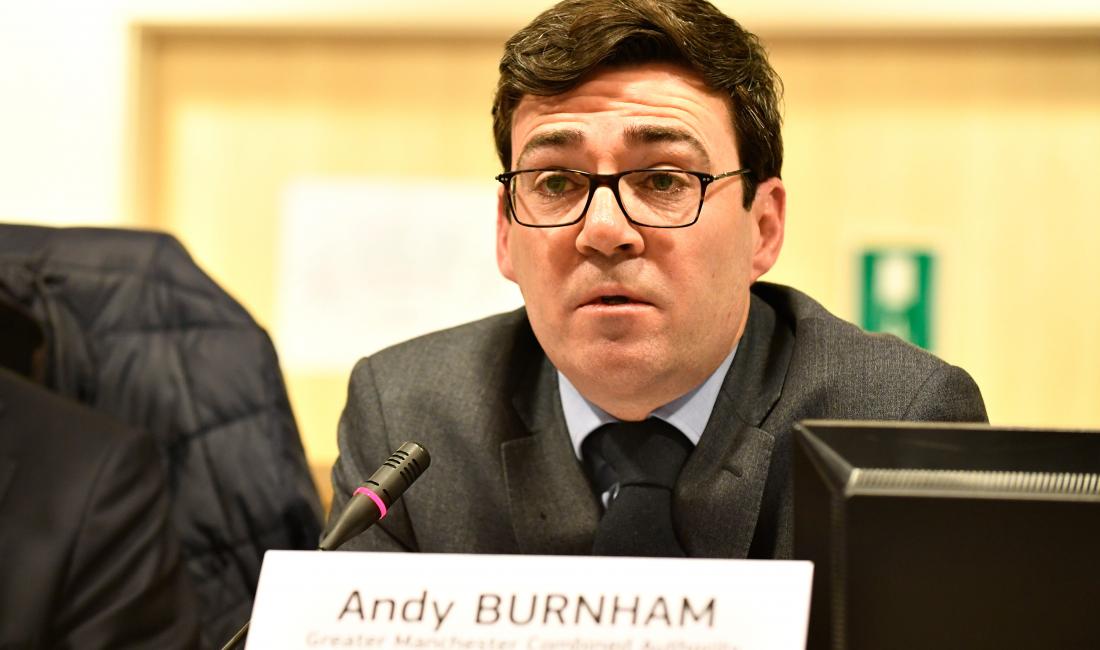
The incoming British Prime Minister Andy Burnham’s June 29 speech marked a watershed moment in the UK’s devolution debate. Speaking from the People’s History Museum in Manchester, the former Greater Manchester Mayor is attempting something audacious: exporting the “Greater Manchester Way” as a national, and potentially global, blueprint for governance.
This speech is a fascinating example of how the democratic axis is shifting from central command to regional agency. However, while Burnham accurately diagnoses the rot within Westminster, his prescribed cure carries its own institutional paradoxes.
At its heart, Burnham’s speech argues that spatial inequality is a democratic failure. He positions the over-centralization of the UK state not just as an economic inefficiency, but as the root cause of a twenty-year decline in living standards and public trust.
For local government globally, the speech champions “Place-First” politics over partisan warfare. Burnham is claiming that modern democracies cannot survive if they continue to treat local councils as mere administrative arms of the central state. Instead, he positions local government as the primary engine of economic growth, social cohesion, and democratic renewal.
The mayor-turned-PM gets some thing right. Burnham’s perspective is forged in nine years of metro-mayorality, giving his arguments a practical authority that standard Westminster rhetoric lacks.
Burnham correctly identifies that trickle-down economics has failed the regions. By advocating for “Manchesterism”—where local postcodes drive their own industrial strategies based on regional assets (like life sciences in Manchester or green transition in Port Talbot)—he aligns with modern progressive economic thinking.
In a refreshing twist for a national political pitch, Burnham anchors democratic health to basic material security: technical education and social housing. His nod to the Finnish “Housing First” model recognizes that a citizen cannot meaningfully participate in local democracy if they lack a stable front door.
His critique of Whitehall’s “turf wars” and the stifling nature of the Westminster whip system will resonate with local leaders worldwide. He rightly notes that local government thrives on cross-sector collaboration (public, private, voluntary), whereas central government is structurally wired for siloed conflict.
But Burnham’s vision contains no shortage of blind spots.
Burnham’s headline proposal to create “No 10 North,” a Manchester-based alternative to the PM’s home and office at 10 Downing Street, deserves little respect.
There is a deep ideological contradiction in trying to dismantle an over-centralized state by expanding the footprint of the Prime Minister’s executive office. By routing devolution through an extended arm of Downing Street, Burnham risks creating a more efficient form of central command rather than genuine local autonomy. True devolution should empower local government directly, not make it dependent on a “benevolent” northern branch of the center.
Burnham speaks passionately about threadbare local councils unable to fix potholes, let alone drive regeneration. He promises a massive council house building program and utility reform. Yet, in the same breath, he swears allegiance to “the discipline of our current fiscal rules.”
You cannot fix structurally starved local government within the confines of Westminster’s existing fiscal orthodoxy. Without addressing local tax retention, fiscal devolution, or a fundamental overhaul of how funding is allocated, “No 10 North” will simply be redistributing scarcity.
Burnham also relies too heavily on the success of Greater Manchester. However, Greater Manchester is an urban, economically coherent combined authority with a distinct identity. He doesn’t explain how this model translates to highly fragmented rural economies, two-tier county councils, or deeply divided coastal towns. Globally, local democracy varies wildly. A model that relies on a high-profile convener will not scale to areas lacking the institutional muscle of a major metropolitan city-region.
Burnham rhetoric reveals him as more astute follower than leader. His speech acknowledges the global reality that cities and regions are the real laboratories of democratic innovation while nation-states stall in polarization. And he wants to be on the local side of that divide. His focus on using public procurement for social value and reclaiming public control over essential utilities (like the Bee Network buses) reflects a broader international pushback against hyper-globalization and municipal privatization.
Burnham offers some good ideas about how a “wired” democracy might work from the ground up. But for his vision to truly succeed, he must trust local government enough to let go of the reins entirely, rather than just moving the levers of power from London to Manchester.