The Importance of Remembrance for a Democratic Future
As the year comes to an end, I always pause to look back at how much has happened in the previous 12 months. I look back at my year and see how much change I’ve undergone. This nostalgic feeling is accompanied by the thrilling excitement of a new year. A year in which I can use what I’ve learned and the growth I've had to make better choices, to be a better person.
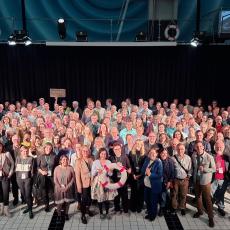
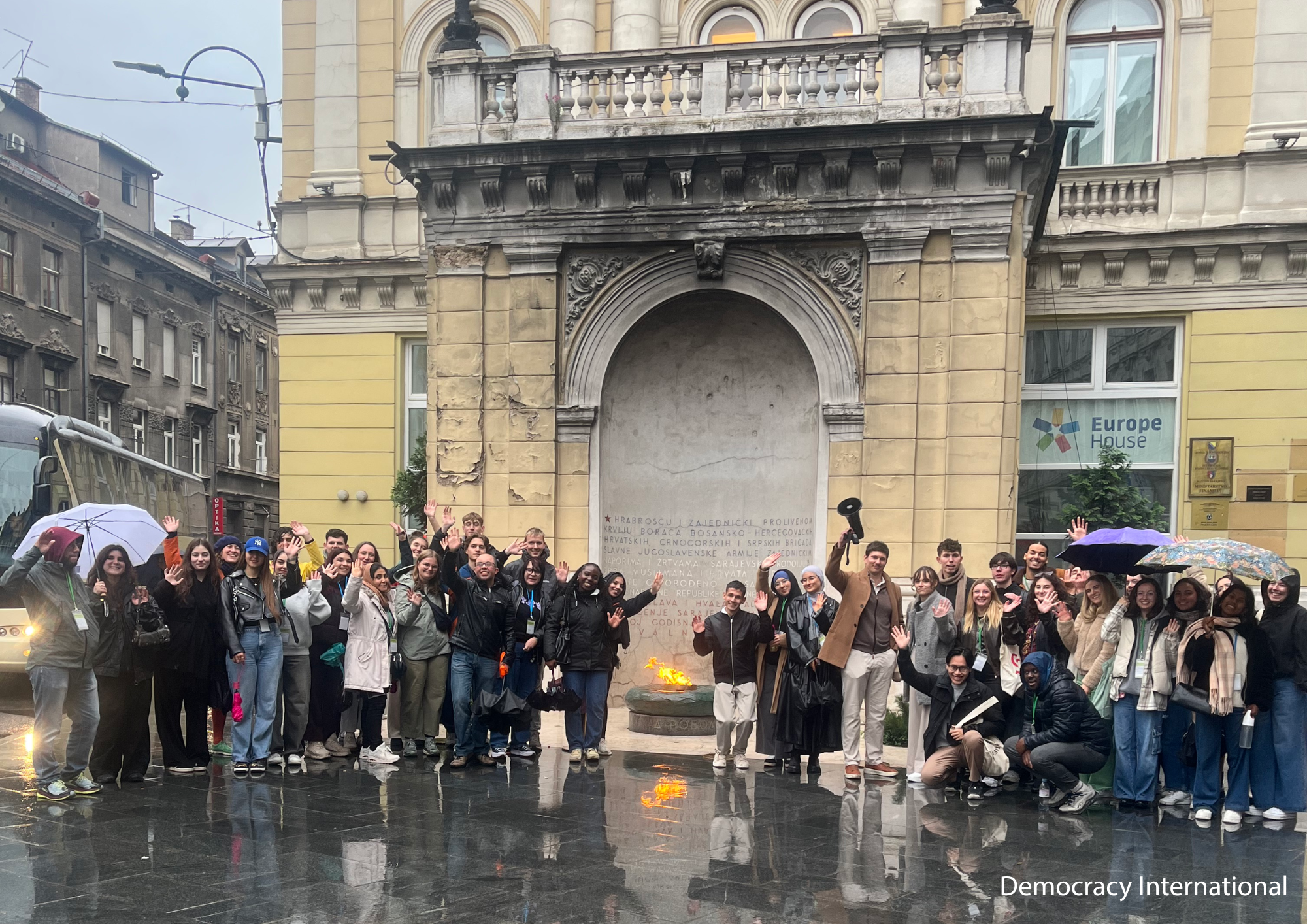
This same process, of remembering the lessons of the past to build a better future, happens to our exercise of collective remembrance, which was one of the main topics of the youth exchange, Youth Bridges Europe. The exchange took place in Bosnia and Herzegovina, with more than 60 young people discussing topics such as historic distortion, narratives, and civic remembrance.
Participants shared my feeling that looking at the past must be accompanied by actions to improve the future. When asked whether remembrance is more about the future than the past, participants said it is more about the future. Miray Kurt, a participant from Youth Bridges Europe, confirmed this by saying:
“If we remember the past, but don’t change the future, then it is for nothing “
At a time when Europe faces rising polarisation, disinformation and attacks on our rights and democratic institutions, collective remembrance becomes essential not only to honour the past and those who have undergone the horror of our history, but to safeguard our democratic values and consciously shape a more just future from the lessons we have learned.
Understanding History on the Ground
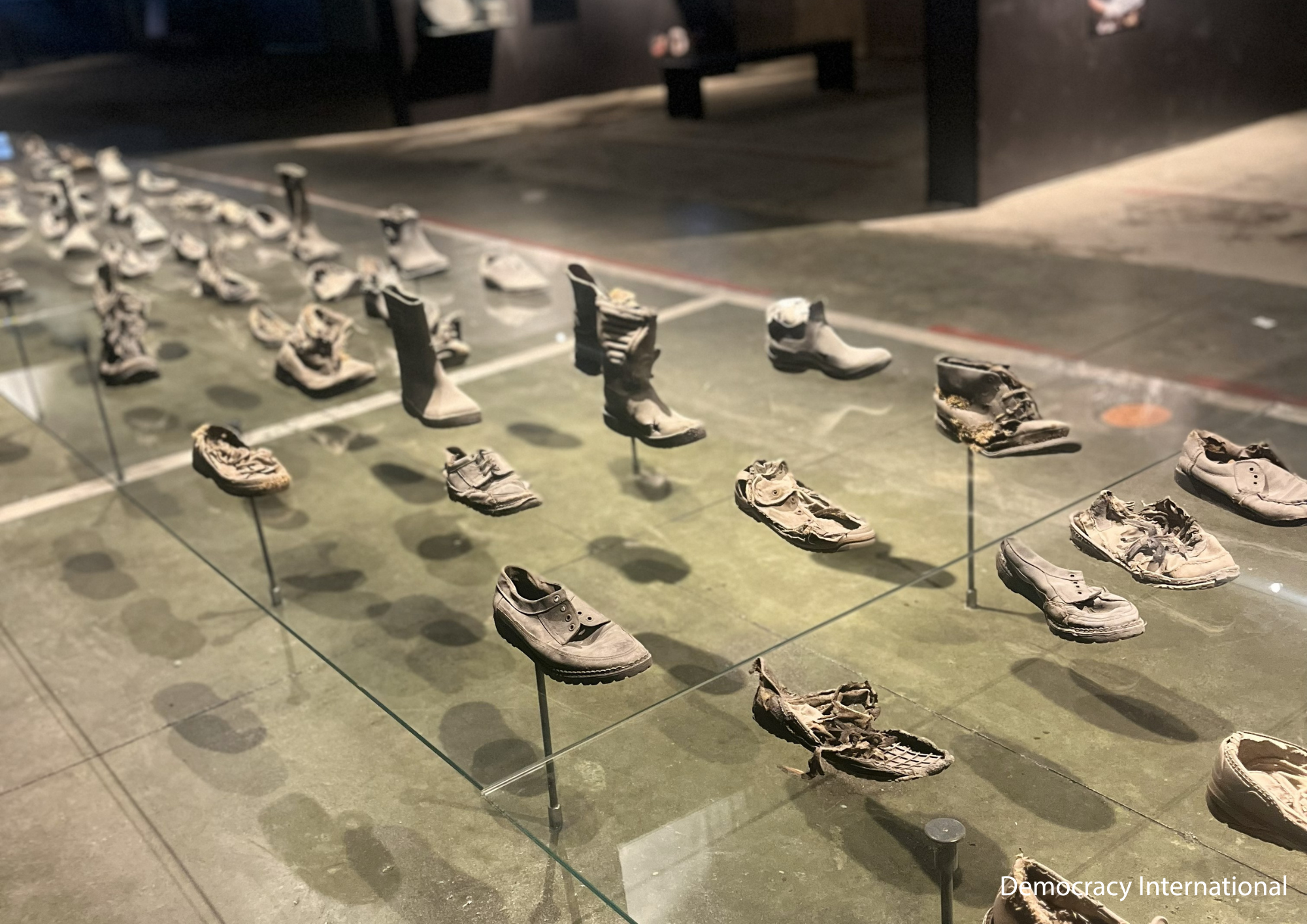
During Youth Bridges Europe, participants not only had workshops and discussions about civic remembrance, but they also experienced it through physical spaces dedicated to this. In Sarajevo, they visited the War Childhood Museum, the only museum worldwide devoted exclusively to the experiences of children whose childhoods were affected by war. The museum gave a personal face to conflict. Personal items such as toys, clothing pieces, and diaries filled the museum, each accompanied by a deeply moving text describing how the everyday lives of the children who owned them were disrupted.
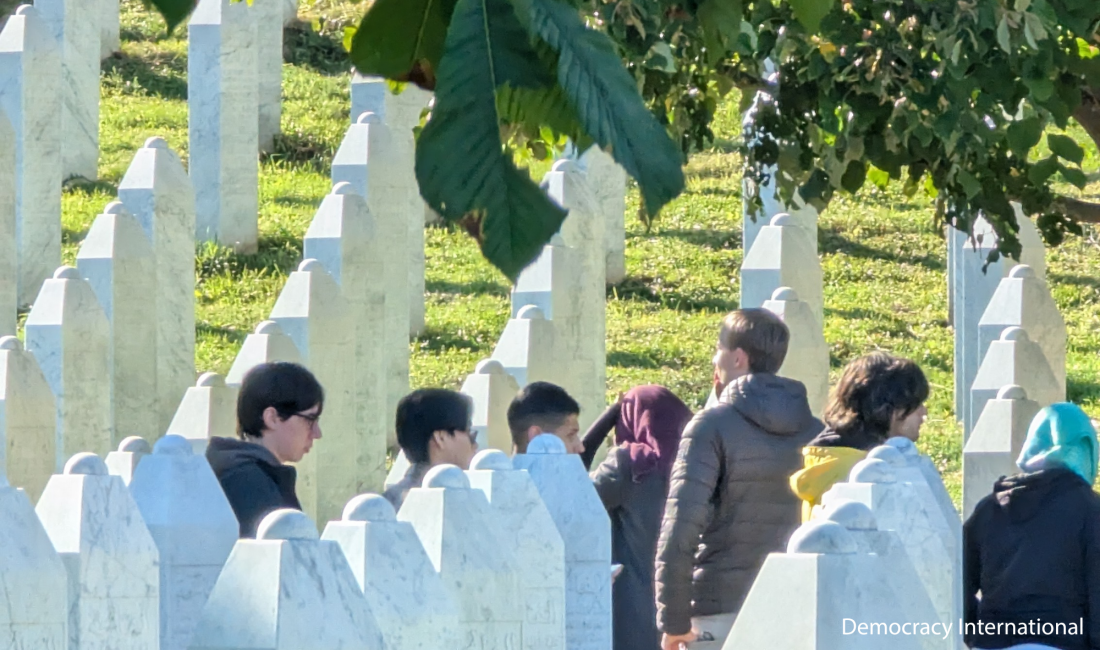
Later in the exchange, participants visited the Srebrenica Memorial Centre, in which they were confronted with the scale of violence and terror of the Srebrenica genocide.
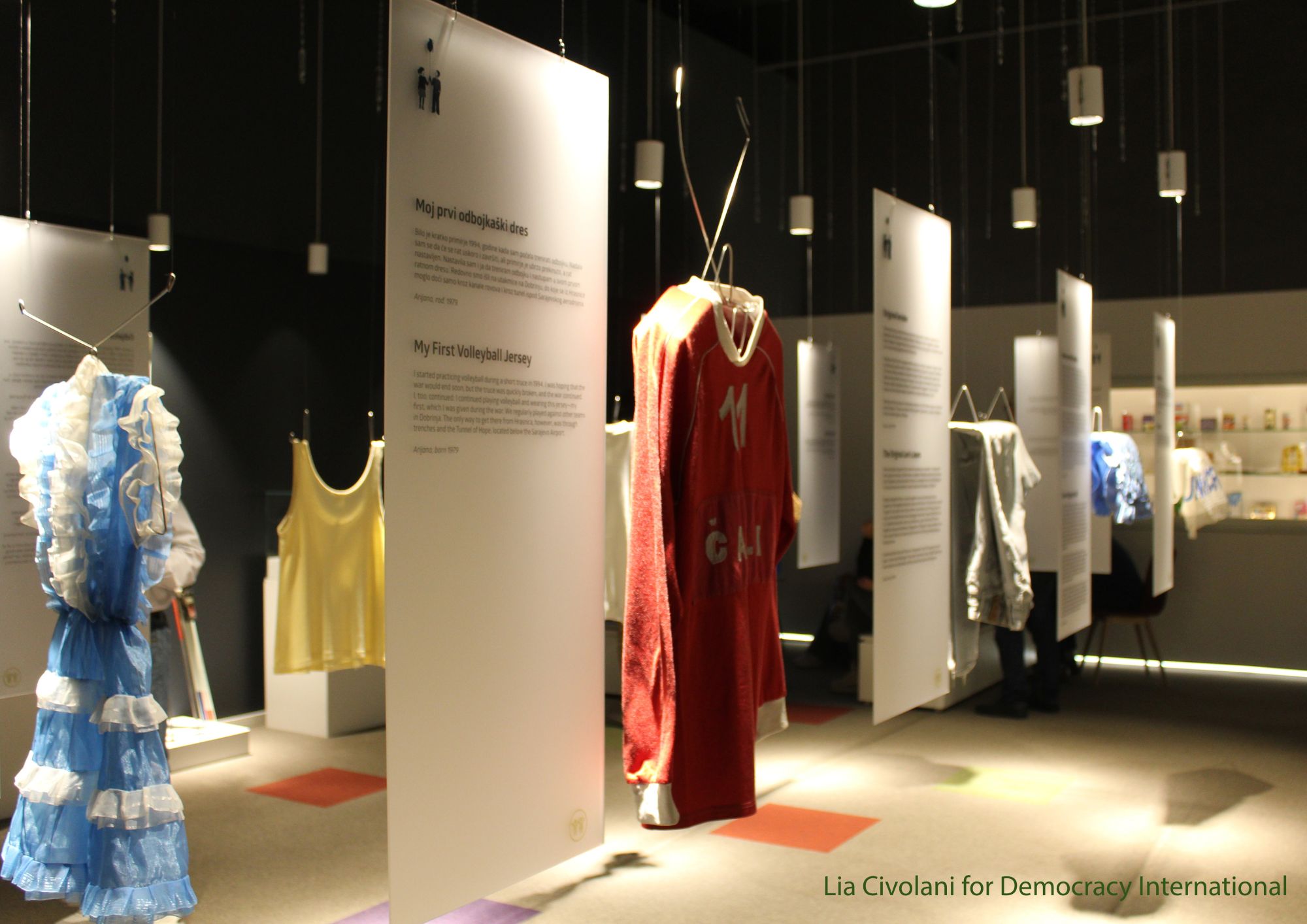
These physical spaces for remembrance elucidate that collective memory is not an abstract term. It is rooted in real stories, in the lives of the children who had a war childhood and in the families who lost some of their loved ones during a cruel genocide. Spaces like this turn numbers, dates and articles back into human lives. They remind us that our responsibility when remembering these events and honouring these people is to prevent such violence and horrors from repeating themselves.
During the event, participants also engaged in activities dedicated to remembrance and building critical awareness. In one of the workshops on media literacy, participants were invited to unpack historical representations of different groups in the Bosnian political context. In another workshop, participants learned about different peacebuilding processes that can be used in post-conflict scenarios. This critical awareness of historic narratives and peacebuilding processes turns remembrance into an active commitment to recognise historic injustices and wrongdoing and protect democratic values nowadays.
Why Remembrance Matters for Europe Today
The lessons learned during Youth Bridges Europe are closely related to democratic challenges Europe, and most of the world, faces today. There is an exponential increase in political polarisation, with individuals dividing themselves into “antagonist political camps” This is only one of the threats researchers connect to democratic backsliding and a decline in trust for the institutions that uphold our democracies.
At the same time, disinformation and propaganda are continuously used to manipulate public opinion, further weakening democratic processes. A report, published by the European Parliament, highlights how disinformation negatively impacts human rights, democratic norms, and erodes one of the foundations of democracies, free and fair elections. The Council of Europe also shows that 80% of European citizens acknowledge that the threat of fake news poses risks to their countries and to democracy. Headlines prove that the interference of misinformation and fake news is not only a theoretical risk, but a lived reality.
Added to these threats, there is the rise of far-right extremism and discourse. These normalise anti-democratic rhetoric by exploiting cultural differences, fears regarding migration and security. In the report “State of Hate: Far Right Extremism in Europe,” the authors explain how these far-right movements are a threat to democracy, especially as a transnational political ideology that deliberately challenges democratic norms.
In light of challenges, the conviction of Youth Bridges Europe participants that remembrance is more about the future than the past becomes clear. European institutions have stressed that confronting totalitarian and violent pasts by safeguarding civic remembrance practices is paramount to defending our democracies today.
When young people learn to recognise historical distortion, understand the roots of violence and see how narratives are used to justify exclusion, they become better equipped to resist manipulation in the present.
Looking Ahead: Building Democratic Resilience through Remembrance
Youth Bridges Europe, and its participants, bring the hopeful message that remembrance is not a backwards-looking exercise. It is a forward-looking commitment:
to recognise injustice, to defend democratic values and to imagine a Europe where diversity, solidarity and human rights are protected.
I hope that when looking at our shared democratic future, we do the same exercise I do at the end of the year. We look at our past, we practice civic remembrance, and we involve young people in this exercise to learn from the lessons of the past to protect our institutions nowadays. The participants of the exchange showed me the possibility of a future in which civic memory becomes a shared responsibility and a source of courage and resilience for strengthening democracy.