The Youth Bridges Europe exchange provided a rare opportunity to examine how remembrance, identity and democratic participation interact in contemporary European contexts. What began as a structured programme developed into a deeply reflective learning experience.
The Youth Bridges Europe exchange offered a setting in which historical understanding moved far beyond theoretical knowledge. Before participating, I primarily associated the Srebrenica genocide with statistics and historical summaries. However, the visit to the Srebrenica Memorial Centre confronted me with the human dimension that academic texts alone cannot convey. Objects, personal stories and testimonies created a form of proximity that challenged the emotional distance I did not realise I had maintained. This experience highlighted the importance of safeguarding remembrance cultures, particularly in times when historical distortion is often used to legitimise political agendas.
What struck me most was how remembrance functions not only as an act of commemoration but also as a democratic responsibility. In the exhibitions, the careful documentation and preservation of individual lives emphasised the fragility of truth when confronted with denial or manipulation. I left with a sharper awareness that remembrance is not a passive process. It demands critical engagement, empathy and a willingness to confront uncomfortable realities. Young people, in particular, play a crucial role in maintaining this commitment, because the transmission of memory relies on those who did not directly experience the events themselves.
A second dimension of the programme that left a lasting impression on me was its approach to youth participation. In many institutional settings, “youth involvement” is presented as a desirable objective, yet often remains symbolic. During the exchange, however, our contributions were treated as substantive and necessary. Discussions on civic remembrance, democratic fragility and contested narratives allowed us to articulate our perspectives while engaging critically with those of others.
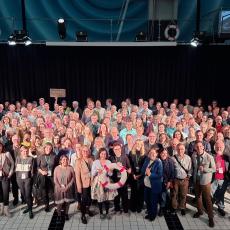
The diversity of participants and their backgrounds added a depth that cannot be reproduced in formal academic contexts alone. Hearing different interpretations of history, particularly in relation to local political experiences, demonstrated how collective memory is shaped by personal, cultural and national contexts. Disagreements were not avoided but used as opportunities to refine our understanding and challenge assumptions.
What I found particularly valuable was the realisation that democracy is not only a political system but also a set of everyday practices. The way we listened to one another, negotiated perspectives and created space for different voices mirrored the principles we often discuss abstractly. These micro-interactions illustrated how democratic values are either strengthened or weakened in the ordinary choices we make when engaging with others.
In reflecting on the programme, I recognise that the experience generated both a sense of clarity and responsibility. Clarity, because I now understand more deeply how remembrance and democratic participation are interconnected. Responsibility, because this understanding requires action whether through critical reflection, engagement in discourse or challenging simplified narratives in my own surroundings.