Why communities are at the heart of climate action?
Imagine two people working towards a more sustainable future.
One is sitting with community members in Kenya, exploring how something often seen as waste, -leftover charcoal dust- can become part of a solution. Together, they transform it into sustainable charcoal briquettes for cooking, showing how communities can turn local challenges into practical innovations.
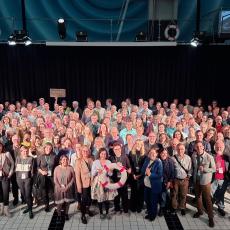
The other is sitting under a tent at the Bonn Climate Camp in Germany, exchanging ideas with people from Brazil, South Africa, India, Pakistan, Germany, the Netherlands and Colombia about how communities can respond to the climate crisis.
At first glance, these two scenes seem worlds apart. One is local. The other is global. One is focused on a local community creating solutions from the resources around them. The other brings together a global network of people sharing experiences, building connections, and strengthening climate movements.
Yet both are driven by the same idea: communities are not waiting to be saved. They are leading climate action themselves.
When people think about climate action, they often imagine world leaders negotiating at international conferences or experts presenting scientific reports. These processes matter, but they are only part of the story. Across the world, communities are already responding to climate change in practical ways. Farmers are adapting to changing rainfall patterns. Youth groups are organising environmental campaigns. Indigenous communities are protecting forests. Residents are creating local solutions to local problems.
The reality is simple: people closest to climate challenges often have the clearest understanding of what needs to change.
This idea sits at the heart of community-led development, an approach that recognises communities not as passive recipients of aid or policy decisions, but as active agents of change. Rather than solutions being designed elsewhere and delivered to people, community-led development starts with local knowledge, priorities, and leadership. In the context of climate action, this means communities identifying their own environmental challenges, deciding what action is needed, and taking ownership of the response.
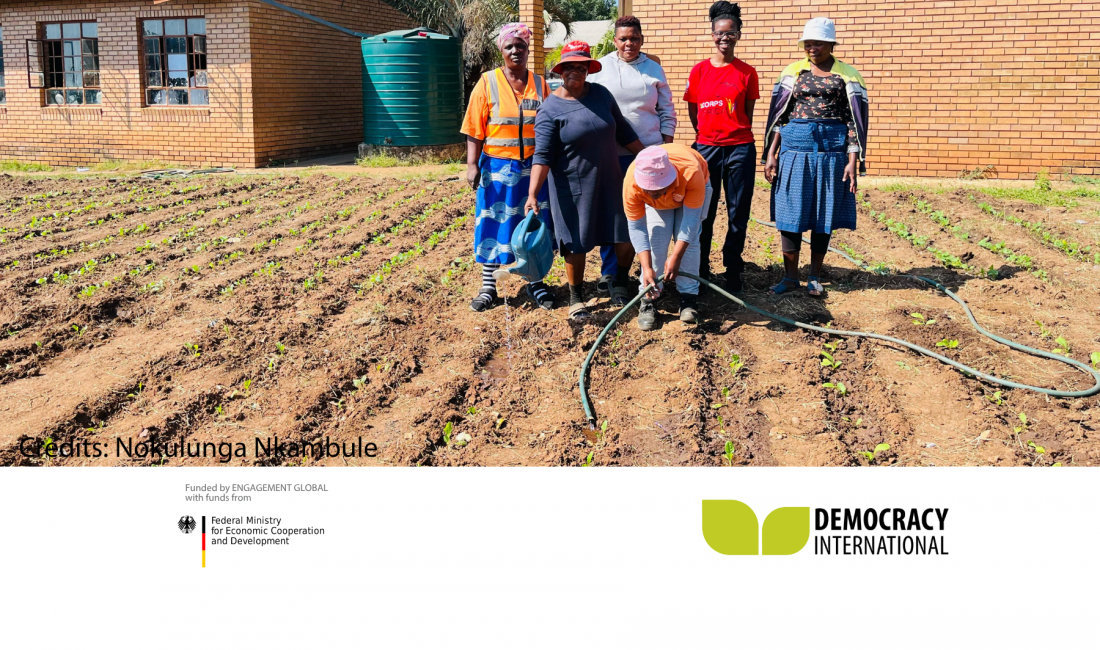
One organisation putting this idea into practice is CorpsAfrica through its Green Initiative. Instead of arriving with predetermined solutions in rural communities, CorpsAfrica volunteers live within communities and work alongside residents to identify challenges and develop projects together.

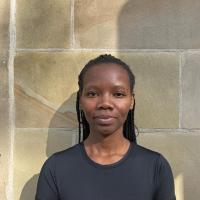
Here is one example from the Green Initiative: In Kenya, CorpsAfrica volunteer Dorcah Nyanchoka worked alongside community members to tackle a challenge affecting both the environment and daily life: dependence on firewood for cooking. Instead of looking for a solution outside the community, they explored what was already available around them. Together, they transformed leftover charcoal dust, often considered waste, into charcoal briquettes that could be used as an alternative cooking fuel. What started as a response to deforestation became a practical innovation that reduced waste, supported more sustainable cooking practices, and opened opportunities for community members to generate income.
Across Africa, similar initiatives continue to demonstrate the power of community-led climate action. Communities and volunteers have worked together to plant trees, restore ecosystems, improve sustainable agricultural practices, and develop locally relevant environmental solutions.
These initiatives succeeded because they were not imposed from the outside. Community members helped identify the problem, design the solution, and drive implementation. That sense of ownership is often what makes community-led climate action sustainable.
But community-led development does not only happen through practical projects on the ground. It also depends on participation-centred spaces where people can meet, exchange experiences, learn from one another, and collectively imagine solutions. These spaces create opportunities for communities, activists, and citizens to move beyond being audiences and become contributors to climate action.
Thousands of kilometres away from these projects, another form of community-led climate activism is taking shape.

Each year, the Bonn Climate Camp brings together activists, organisers, researchers, youth leaders, and civil society groups from around the world. While the United Nations climate negotiations take place nearby, the camp creates a participation-centred space where people can share experiences, challenge ideas, and build connections across borders.
Walk through the camp and you might hear discussions about renewable energy in Africa, climate justice in Latin America, citizen participation in Europe, or Indigenous land protection in the Amazon. Rather than receiving information from experts alone, participants learn from one another's lived realities and grassroots experiences. The value of these conversations goes beyond sharing information. They help people realise that many communities face similar challenges and that solutions developed in one place can inspire action elsewhere. A participant may arrive with a local story and leave with a global network.
From Local Action to Global Change
The climate crisis is often described as a global challenge requiring global solutions. That is true. But global solutions are built from local action.
Every restored mangrove forest, every community garden, every youth-led climate discussion, every citizen initiative, and every community meeting contributes to a larger movement for change.
The experiences of CorpsAfrica volunteers and participants at the Bonn Climate Camp demonstrate that climate action is most effective when people are not treated as beneficiaries but as leaders. Whether through community-led development projects that restore ecosystems or participation-centred spaces that foster dialogue and collective learning, meaningful climate action grows when communities have the opportunity to lead. Communities already possess knowledge, creativity, and resilience. What they often need are opportunities to connect, participate, and act. It may begin with just a conversation under a tree, a community meeting in a library, a restored mangrove forest, or a tent at a climate camp.
And from there, it can grow into something much bigger.
At the heart of both stories is something simple: a conversation. Before the charcoal dust became a sustainable solution, and before people from different parts of the world gathered to exchange ideas at the climate camp, there was a space where people could come together, listen, and imagine what was possible.
The question is: how can we create more spaces where these conversations can happen?
To support this idea and approach, Democracy International developed a Participation Pop-Up Event Toolkit through the Citizens for Climate project. The toolkit is designed for community organisers, activists, civil society organisations, educators, facilitators, and engaged citizens, to provide guidance for hosting participatory events. Its purpose is simple: to help people create welcoming and inclusive spaces where communities can come together, discuss shared challenges, and turn ideas into collective action.
You don’t need to wait for the perfect moment to take climate action. Sometimes the first step is simply creating a space where people can begin the conversation
Read the toolkit here
Life as an Activist:
This article is part of Life as an Activist, an initiative that brings activism closer to people by sharing real stories from the grassroots. By highlighting the voices, experiences, and impact of individuals or organisations using democratic and participatory approaches to strengthen their climate activism and action in their communities, the project demonstrates that meaningful change begins with people. These stories are shared not only to inform, but also to inspire others to participate, take action, and explore ideas that can be adapted within their own communities. Explore more stories from Life as an Activist and discover how people around the world are turning participation into action.