A tote bag. A shrinking river. Plastic waste. A community where rubbish is not collected on time.
These might seem like unrelated things, but they all appeared when we asked young people a simple question: what does protecting the environment look like in your life?
The answers took us beyond familiar conversations about climate change and into people's everyday experiences, what they notice around them, what they choose to change, and what they wish could be different.
Tadiwa Tine: Making different choices
For Tadiwa Tine, environmental action starts with the things she can control.
She takes reusable tote bags when she goes shopping instead of using plastic bags. She carries reusable metal straws and switches off lights during the day to avoid unnecessary energy use.
But Tadiwa's story does not stop with her own habits.
She describes waste management as one of the biggest environmental issues in her community. When rubbish is not collected as expected, plastic and other waste accumulates in public spaces. For Tadiwe, this has consequences that go beyond pollution it affects people's health and the environment where children live and play.
She also speaks about overcrowding and the pressure this places on already limited resources. In some households without access to electricity, firewood is used for cooking and heating water, creating another source of environmental pressure.
Her story shows us that environmental challenges are not always simply about individual choices. They are also about the systems, resources and opportunities available to communities.
Watch Tadiwa's video to hear her describe these experiences in her own words.
Tadiwe by Nokulunga
Dorcah Nyanchoka: Passing it on
For Dorcah Nyanchoka, protecting the planet is also about bringing the next generation into the conversation.
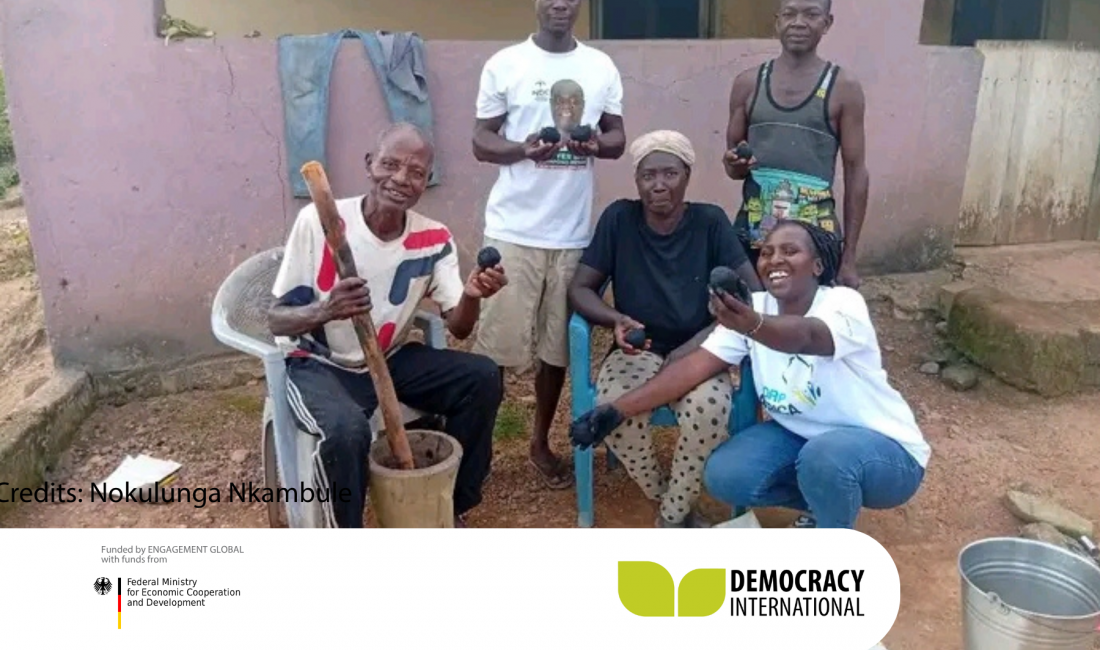
She is teaching children in her community how to reuse plastic bags creatively. The activity gives them something practical to do with waste while introducing them to different ways of thinking about environmental protection.
Dorcah works with children in her community, teaching them creative ways to reuse plastic waste. Through this, she is not only helping reduce pollution but also showing children that they can use creativity and everyday actions to contribute to protecting their environment.
Her connection to the issue is also deeply personal. Growing up in a rural community, Dorcah remembers swimming in a large river with her friends and brother. Over the years, she has watched the river become smaller something that has made the impacts of environmental change much more real to her.
Her message is simple:
We only have one planet.
And protecting it is not only about us. It is also about the kind of planet we leave for the people who come after us.
Watch Dorcah's video to hear more about the river she remembers and the work she is doing with children today.
Dorcah by Nokulunga
Different experiences, different responses
Tadiwa and Dorcah are responding to the environments around them in different ways.
One carries reusable bags and speaks about waste collection and access to resources. The other works with children and reflects on changes she has witnessed in her community.
Their experiences also show why conversations about the environment cannot be separated from conversations about people and participation.
Environmental problems are experienced locally, but the decisions that shape them can involve communities, public authorities and wider systems. Making space for people to describe what they are experiencing is an important part of understanding what needs to change.
And perhaps that is one of the most interesting things to take from these two stories: there is no single way to participate in protecting the environment.
Sometimes it starts with changing your own habits. Sometimes it means teaching someone else. Sometimes it means pointing out a problem that has been ignored.
So, after hearing from Tadiwe and Dorcah:
What environmental changes are you noticing where you live, and what are you doing about them?
Life as an Activist:
This article is part of Life as an Activist, an initiative that brings activism closer to people by sharing real stories from the grassroots. By highlighting the voices, experiences, and impact of individuals or organisations using democratic and participatory approaches to strengthen their climate activism and action in their communities, the project demonstrates that meaningful change begins with people. These stories are shared not only to inform, but also to inspire others to participate, take action, and explore ideas that can be adapted within their own communities. Explore more stories from Life as an Activist and discover how people around the world are turning participation into action.